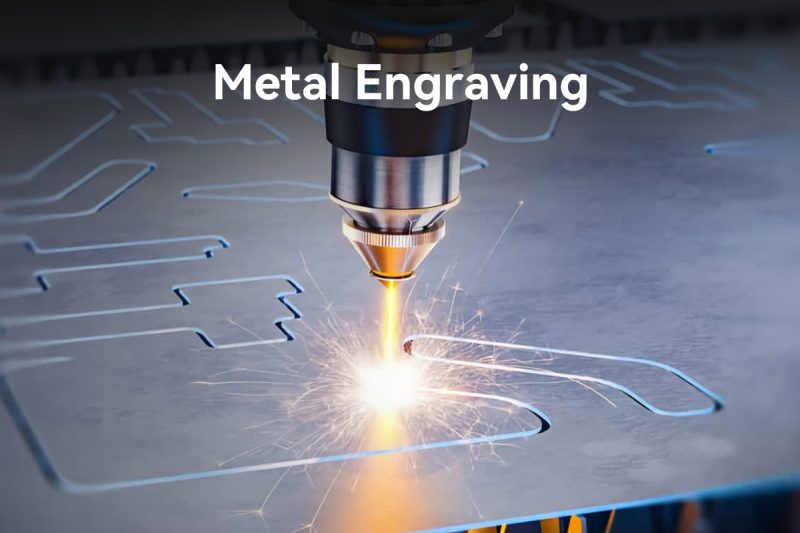
Laser engraving technology has become an important processing method in the fields of modern manufacturing, design and personal customization. It etches, marks or precisely engraves materials through a focused laser beam. Especially in the field of metal processing, choosing the right laser is crucial to achieve the best engraving effect. This blog will explore the characteristics of different types of lasers and analyze which laser is best for engraving metal.
Laser Engraving Technology Overview
Laser engraving is a technology that uses a focused beam of light to precisely cut or engrave on the surface of a material. This technology does not require physical contact, so it is very suitable for fine or high-detail work. Laser engraving machines are mainly divided into CO2 laser engraving machines and fiber laser engraving machines, each of which is suitable for different materials and application scenarios.
Types of Laser Engraver
CO2 laser engraver
CO2 laser engravers use a gas laser that produces a high-energy laser beam through electrical stimulation. They work best with non-metallic materials, but can also be used to engrave on coated metals or anodized aluminum. CO2 lasers offer a larger working area and are often used to engrave larger items.
Diode laser engraver
Also known as semiconductor laser engravers, they are devices that use semiconductor diodes as the laser medium. When an electric current passes through the diode, the emitted laser light is further focused into a focusing lens and irradiated onto the surface of the workpiece. They are best suited for engraving non-metallic materials such as wood.
Infrared laser engraver
Infrared laser engravers use solid-state lasers to produce a high-energy beam by amplifying the light through a fiber optic cable. These machines are designed for metal engraving and cutting and provide excellent results on metals.
Why Infrared Lasers are Better for Metal Engraving
Although CO2 lasers excel in non-metal engraving, infrared lasers are the first choice for metal engraving due to their unique advantages:
High power density: Fiber lasers have high power density, which allows for precise and fast metal engraving.
Wavelength advantage: Metals highly absorb the wavelength of fiber lasers (about 1064nm), which makes metal laser engraving more energy-efficient because most of the energy is transferred to the metal surface.
Engraving effect: Fiber lasers can engrave directly on metals, while CO2 lasers usually require special coatings or pretreatment when engraving metals.
Adaptability: Fiber lasers can adjust power, pulse width and frequency to the most suitable processing parameters according to different materials.
Economical: Fiber lasers have fast processing speeds, low maintenance requirements and long service life, making them an economical and efficient choice for metal engraving.
Challenges of Metal Engraving
Although fiber lasers offer significant advantages in metal engraving, they still face challenges when engraving highly reflective metals. For example, highly reflective metals such as stainless steel and aluminum sheets may cause the laser beam to reflect off the surface, increasing the risk of machine or material damage. Special laser settings or pre-processing steps may be required to overcome these challenges.
Reflective Metals
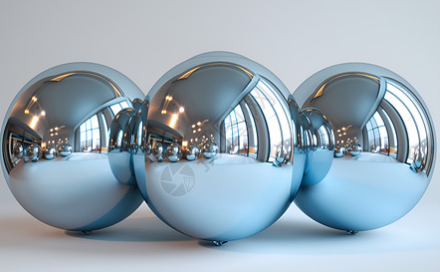
Reflective metals refer to metal materials whose surfaces are polished to reflect light and produce a significant reflective effect. The following are some types of reflective metals:
- Aluminum: Aluminum is a lightweight metal that can produce a silvery-white reflective effect after polishing. It is often used in automobiles, construction, jewelry and other fields.
- Silver: Silver is a precious metal known for its bright white luster and high reflectivity. It is often used in jewelry making and decoration.
- Copper: Copper itself has a warm tone, but it can also produce a reflective effect after polishing. It is often used in sculptures, architectural decorations, etc.
- Stainless Steel: Stainless steel has a smooth surface and can produce a mirror-like reflective effect after polishing. It is often used in architectural decoration, tableware and other fields.
- Gold: Gold is a precious metal with a unique golden luster. It is often used in jewelry, artwork and decoration.
The reason why these metals can produce reflective effects is mainly because they have strong light absorption and high reflectivity. The reflective properties of the metal surface make most of the light reflected back after it hits the metal surface, thus producing a bright reflective effect.
Conclusion
In summary, fiber lasers are the most suitable type of laser for metal engraving due to their high power density, wavelength suitable for metal absorption, precise engraving effect and economy. They can achieve excellent engraving effects on a variety of metals such as stainless steel, aluminum, brass, etc. However, when facing the challenges of highly reflective metals, additional techniques or pre-processing steps may be required to ensure the best engraving effect. With the advancement of technology, the application of fiber lasers in the field of metal engraving will become more and more extensive, bringing more possibilities to manufacturing and personalized customization.
