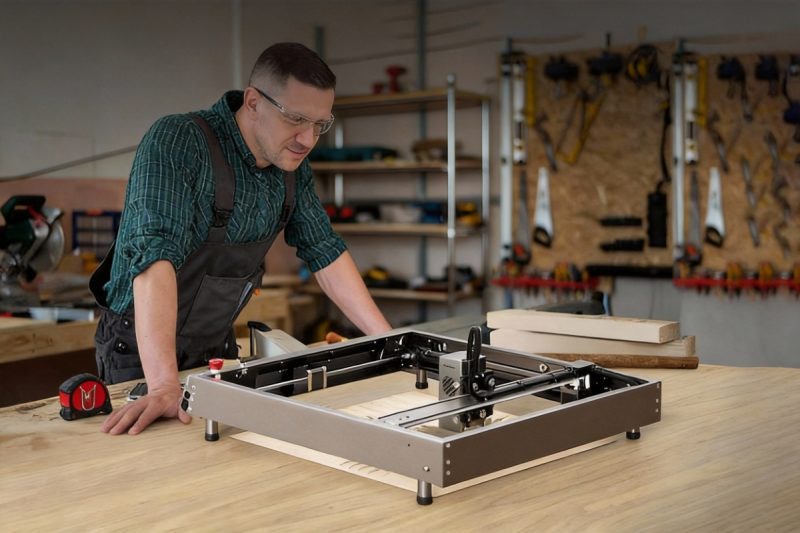
For many urban makers, the dream of a home-based workshop often hits a wall—literally. If you are wondering, is laser engraving realistic in an apartment, the answer is a qualified “yes,” but it requires moving past marketing hype and confronting the physical realities of air quality, noise, and fire safety in a shared building.
Unlike a garage or a dedicated workshop, an apartment is a high-stakes environment where a mistake doesn’t just ruin a project—it can lead to a lease violation or a health hazard. This guide serves as a professional reality check to help you decide if your space is truly compatible with laser technology.
1. The Apartment “Hard Limits” (Self-Filtering)
Class 1 vs. Class 4: The Liability Gap
In an apartment, the machine type is your first safety filter. Class 1 (Fully Enclosed) is the only realistic choice for high-density living. These machines are housed in a light-tight box with safety interlocks that cut power if the lid is opened. This protects not only your eyes but also prevents stray reflections from damaging the retinas of pets or family members sharing the space.
The “Bedroom Rule”
Never operate a laser in a room where you sleep. Even with high-end filtration, residual “off-gassing” from cut materials stays in the air for hours. A dedicated “hobby corner” or a home office with a hard floor (easier to clean than carpet) is the minimum requirement.
2. Managing the “Big Three” Apartment Risks
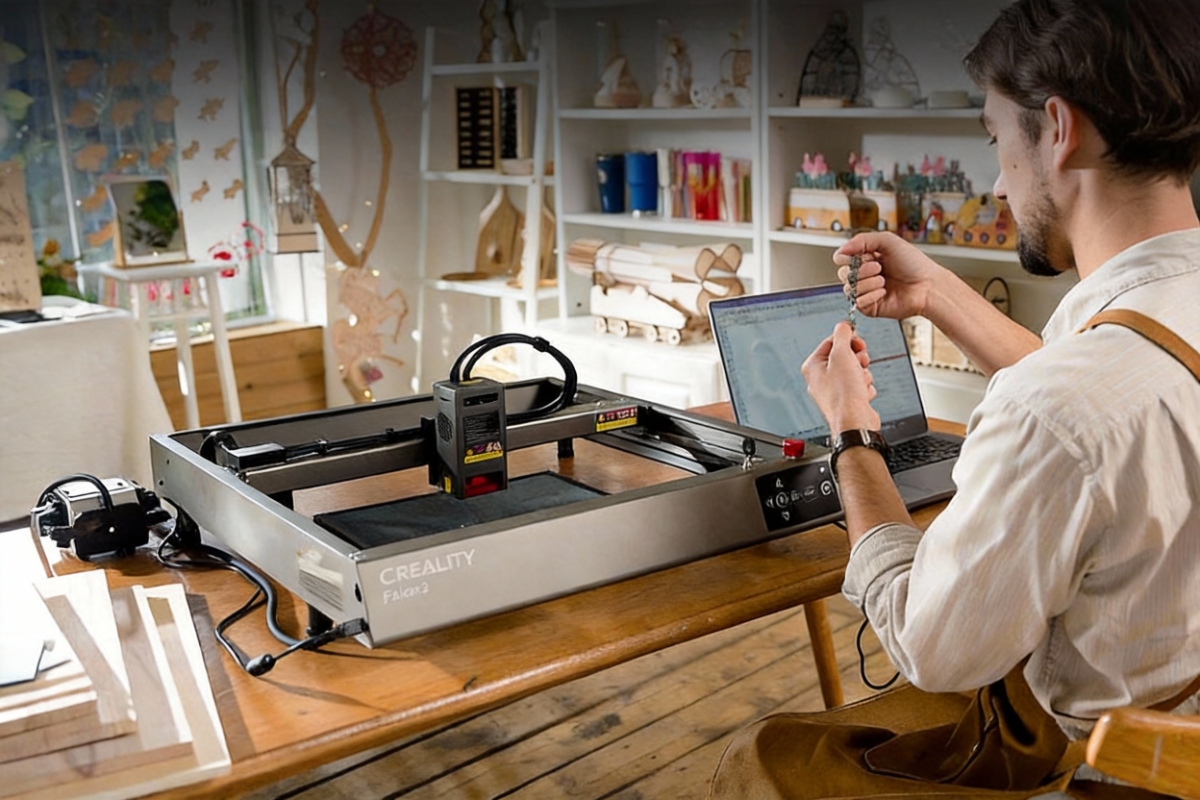
Smoke & VOCs: The Ventilation Reality
Marketing often suggests that a $400 “smoke purifier” makes a laser indoor-safe. This is a half-truth. While HEPA filters remove visible soot, they struggle with the Volatile Organic Compounds (VOCs) produced by cutting. The only gold standard is a direct-to-window exhaust system. For European “tilt-and-turn” windows, you must use a specialized window seal kit to prevent smoke from drifting back into your (or your neighbor’s) flat.
Acoustic Signature: Will Neighbors Complain?
The laser itself is silent; the noise comes from the peripherals. Expect a noise floor of 55–70 dB—similar to a loud vacuum cleaner. To keep peace with neighbors:
- Use anti-vibration mats (washing machine pads) to stop stepper motor hum from traveling through the floor.
- Schedule your work during “socially acceptable” hours (avoiding early mornings or late nights).
Fire Mitigation: High-Density Safety
In a garage, a flare-up is a mess. In an apartment, it’s a catastrophe. You must have a CO2 fire extinguisher and a fire blanket within arm’s reach. Critical Rule: Never leave the machine running unattended, not even for a minute.
3. The “Forbidden List”: Materials to Avoid Indoors
In an apartment, you cannot engrave everything. Some materials are not just smelly—they are toxic or corrosive:
- PVC / Vinyl: Produces hydrogen chloride gas. It will kill you and rot your machine’s electronics.
- Treated Leather: Releases chromium and heavy odors that linger for days.
- Certain Plastics: Can produce cyanide gas or thick, sticky soot that ruins your home decor.
4. Apartment vs. Garage: Comparison Table
| Feature | Apartment Reality | Garage/Workshop Reality |
|---|---|---|
| Ventilation | Exhaust + Window Port (Required) | Open door or wall vent |
| Noise | Strictly daytime; vibration-dampening | 24/7 operation possible |
| Materials | Strictly low-odor / Non-toxic | Wider variety (Acrylic, Leather) |
| EU Compliance | Class 1 Enclosed (Mandatory) | Class 4 Open (Possible) |
5. Final Decision: Go or No-Go?
The “Go” Scenario
- You have a window near your desk.
- You can afford a Class 1 machine.
- You prioritize safety over speed.
The “Hard Stop”
- You live in a studio with no partitions.
- You have no window access.
- You have sensitive neighbors or strict landlords.
