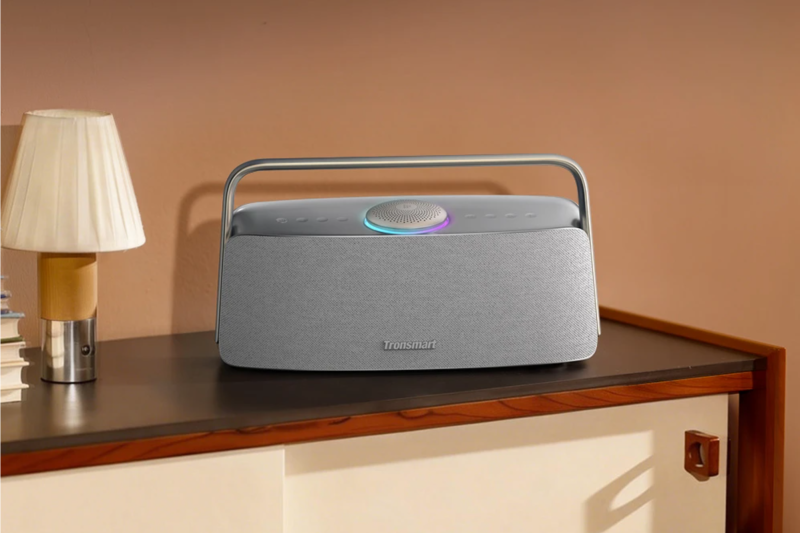
If you are looking for a hybrid audio device that bridges the gap between a living room soundbar and an outdoor party speaker, you have likely come across the Tronsmart Fiitune X30. At a standard retail price of roughly €130 (currently available for €109 using the coupon code TSMART06), it boasts an aggressive specification sheet: 80W peak power, LDAC high-resolution audio support, and a complex 5-driver array featuring an upward-firing sky driver for spatial audio.
But specs do not always equal acoustic performance. In this comprehensive Tronsmart Fiitune X30 review, we will analyze whether these features translate into real-world value or if they simply serve to inflate the spec sheet, helping you decide if this speaker belongs in your home.
The 60-Second Verdict: Who Should Buy It & Who Should Pass
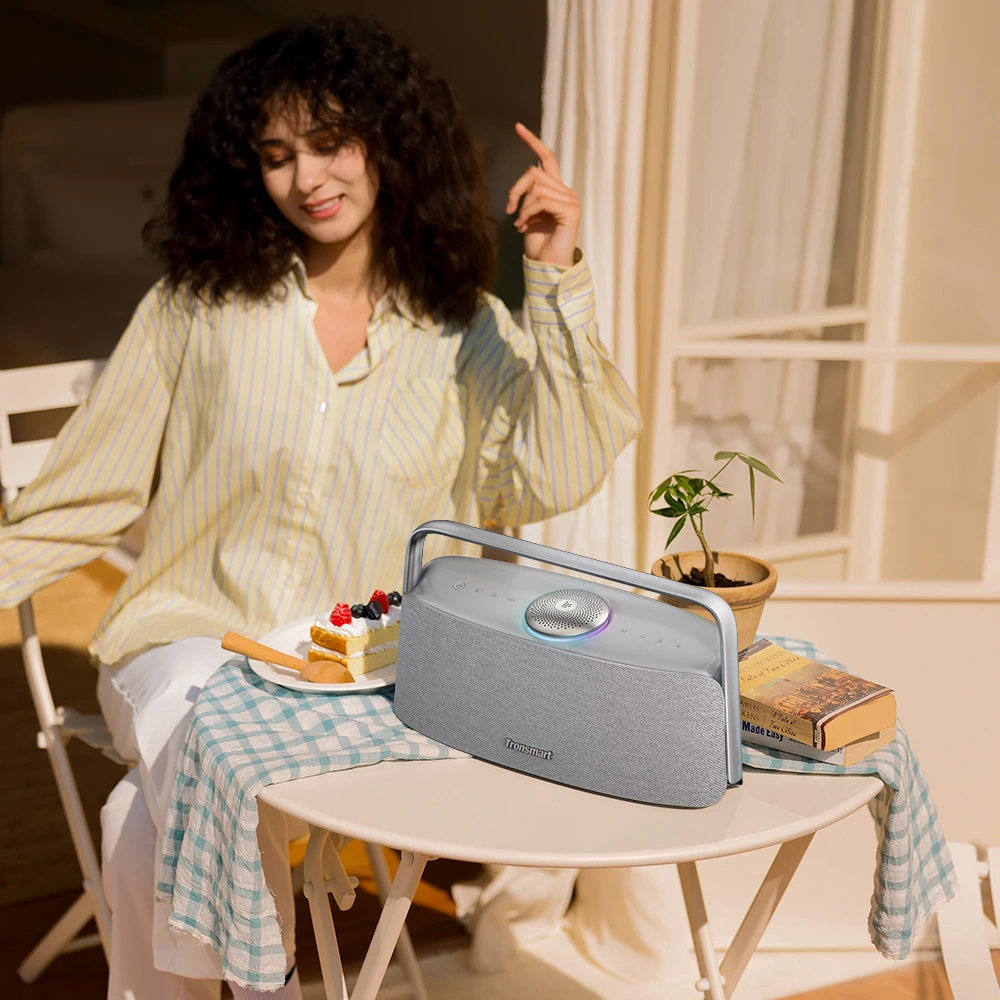
For those who need to make a rapid purchasing decision, here is the unfiltered breakdown of where the Fiitune X30 excels and where it falls short.
You should buy the Fiitune X30 if…
- You want a hybrid indoor/outdoor speaker: It has the tuning and spatial separation for movie nights, but the 80W output required for backyard gatherings.
- You are a budget-conscious audiophile on Android: The inclusion of the LDAC codec allows for high-resolution streaming that competitors in this price bracket often omit.
- You value price-to-performance over brand prestige: Especially at the €109 coupon price, it delivers hardware (like the Knowles DSP and sky driver) that typically costs well over €200 from legacy audio brands.
You should skip the Fiitune X30 if…
- You need extreme, rugged portability: With an IPX6 rating, it is splash-proof but not fully submersible (IP67). Its weight and multi-driver setup also make it a heavy carry for hiking or backpacking.
- You are deeply integrated into the Apple ecosystem: iOS devices do not support LDAC, meaning iPhone users will default to standard AAC/SBC codecs, negating one of the speaker’s main selling points.
- You want modular multi-room audio: It supports True Wireless Stereo (TWS) pairing with a second X30, but it does not integrate into Wi-Fi-based multi-room ecosystems like Sonos.
Real-World Use Cases: How It Actually Performs

Moving beyond the specification sheet, it is critical to evaluate how the speaker’s hardware performs in the environments it was designed for.
Scenario 1: The Living Room Cinema (Testing the Spatial Audio)
Tronsmart heavily markets the “Waves spatial surround sound,” driven by Knowles DSP and an upward-firing sky driver. In a living room setting, this is not a gimmick, but it does require managed expectations. The sky driver successfully expands the vertical soundstage, creating a noticeable separation between vocal dialogue (anchored centrally) and ambient background scores (pushed outward and upward). It functions excellently as a makeshift soundbar for a projector or TV. However, it is an algorithmic upmix; it will not replicate the pinpoint directional accuracy of a discrete 5.1.2 Dolby Atmos home theater system.
Scenario 2: The Backyard BBQ (Testing 80W Peak Output)
Outdoors, acoustic projection relies on raw power and bass response. The 80W peak output, combined with four passive radiators, ensures the X30 can comfortably fill a 50-square-meter patio. Up to about 75% volume, the DSP keeps the low-end tight and punchy. Pushing past 85%, the bass begins to plateau to protect the drivers, prioritizing mid-range clarity so vocals remain audible over crowd noise. It is plenty loud for a BBQ, though bass purists may notice the low-end roll-off at absolute maximum volumes.
Addressing the Dealbreakers: Battery, Durability, and Bulk
Before purchasing, buyers must understand the physical and operational limitations of the Fiitune X30.
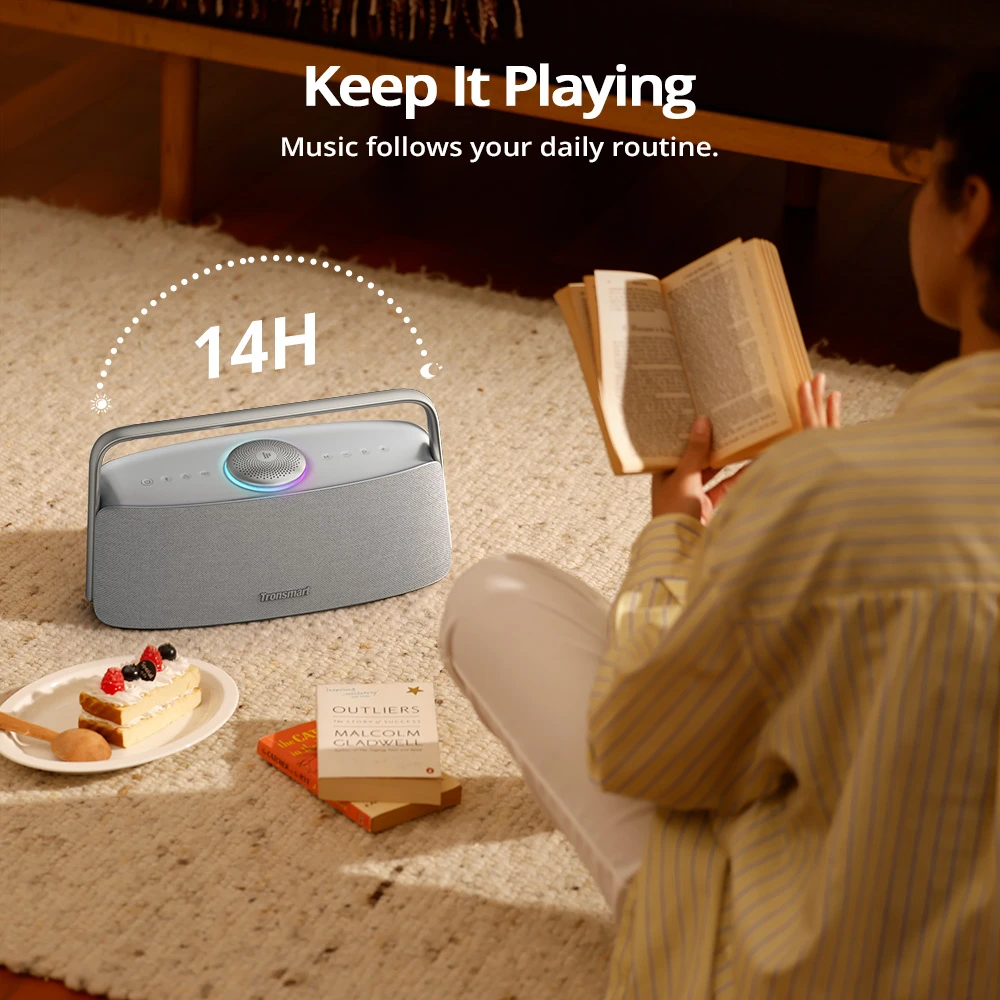 The Reality of the 14-Hour Battery Claim
Tronsmart equips the X30 with a massive 13200mAh (11.1V/4400mAh) battery, claiming up to 14 hours of playtime. It is vital to note that this metric is tested at 50% volume using standard audio codecs. If you are blasting the speaker at 80% volume outdoors with the high-bandwidth LDAC codec activated, expect that battery life to drop closer to the 7-to-9-hour mark. This is still sufficient for a full-day event, but heavy users should plan to utilize the USB-C charging port overnight.
IPX6 Water Resistance: Safe for the Pool?
The IPX6 rating means the speaker can withstand high-pressure, heavy sprays of water from any direction. It will easily survive rain, a spilled drink, or being splashed next to a swimming pool. However, unlike IPX7 or IP67 ratings found on some competitors, it is not rated for submersion. If it falls into the deep end of the pool, it may sustain permanent damage.
Form Factor Check: Movable vs. Truly Portable
Because it houses five active drivers, four passive radiators, and a heavy battery, the Fiitune X30 is substantial. It is “movable” rather than “portable.” It is ideal for carrying from the kitchen to the trunk of your car, and then to a picnic table. It is not designed to be clipped to a backpack for a four-hour hike.
Comparative Reasoning: Fiitune X30 vs. The Heavyweights
To determine true market value, the Fiitune X30 must be evaluated against established mid-tier competitors.
| Feature | Tronsmart Fiitune X30 | Soundcore Motion Boom Plus | JBL Xtreme 3 |
|---|---|---|---|
| Approx. Price | €109 (w/ code TSMART06) | ~€150 | ~€250 |
| Peak Power | 80W | 80W | 100W |
| Hi-Res Codec | Yes (LDAC) | No (SBC, Titanium drivers) | No (SBC) |
| IP Rating | IPX6 (Splashproof) | IP67 (Submersible/Dustproof) | IP67 (Submersible/Dustproof) |
| Spatial Audio | Yes (Dedicated Sky Driver) | No (Standard Stereo) | No (Standard Stereo) |
Tronsmart Fiitune X30 vs. Soundcore Motion Boom Plus
Both output 80W, but their tuning differs. The Soundcore is strictly an outdoor party speaker, featuring a rugged IP67 build and an aggressive EQ app. The Tronsmart is more refined; its inclusion of LDAC and the upward-firing driver make it vastly superior for indoor, critical listening or movie-watching, even if it sacrifices the fully submersible IP rating. The €40 price advantage using the coupon code makes the Tronsmart a highly compelling alternative.
Tronsmart Fiitune X30 vs. JBL Xtreme 3 / 4
JBL commands a massive brand premium, often costing more than double the Tronsmart. While JBL offers a highly refined, signature punchy sound and better ruggedness, it lacks high-resolution codec support and spatial audio features. If budget is a primary concern, the Fiitune X30 offers 85% of the JBL experience alongside superior codecs for less than half the price.
Final Rating and Value Proposition
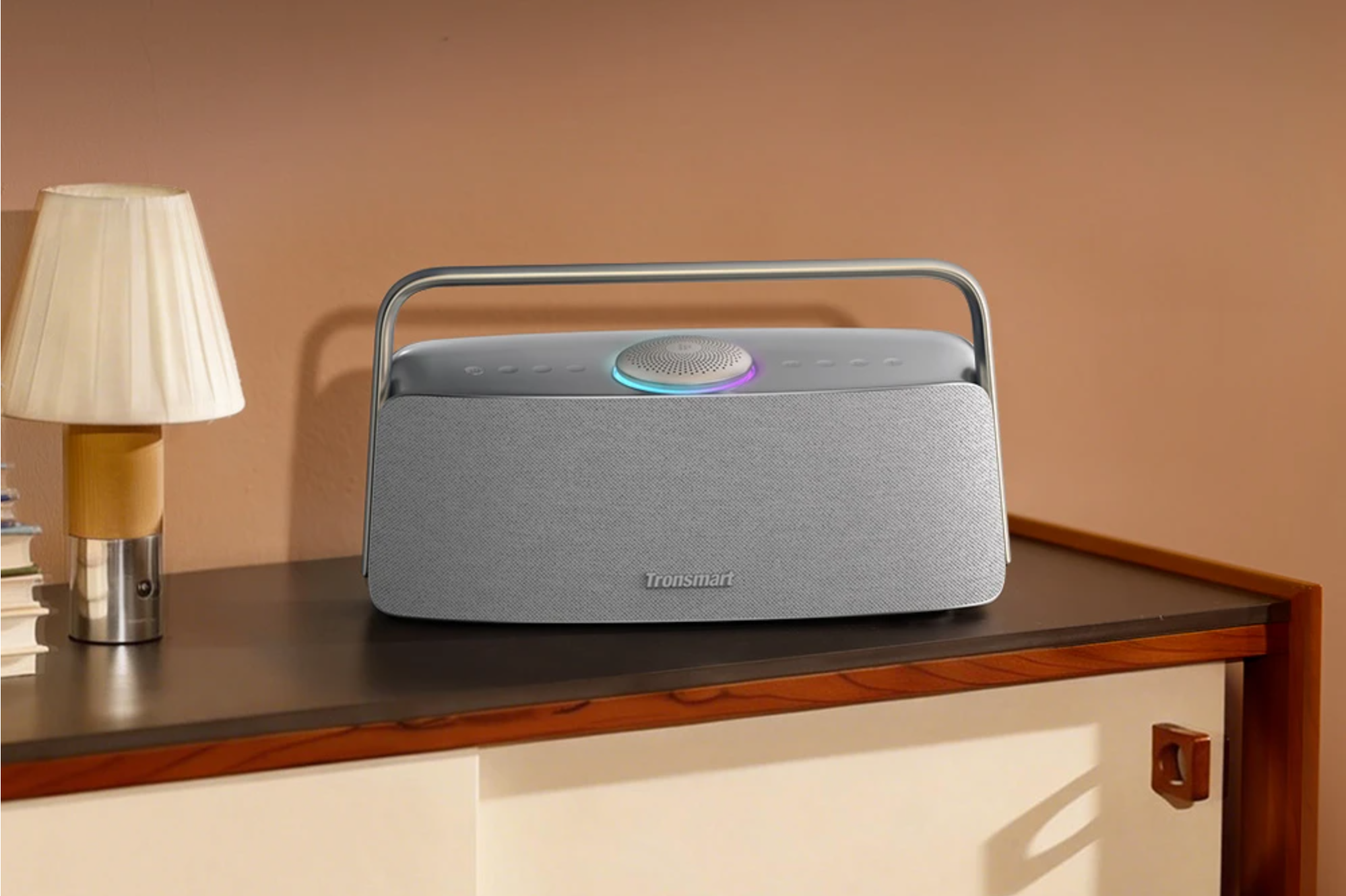
The Tronsmart Fiitune X30 is a highly capable, spec-heavy performer that easily validates its standard €130 price tag. However, when factoring in the TSMART06 coupon code that drops the price to €109, its value proposition becomes exceptionally strong. It successfully executes its dual-purpose design: providing expansive, detailed audio for indoor entertainment while packing enough raw wattage to power an outdoor gathering. While it lacks the extreme ruggedness of an IP67 rating and is too heavy for active travel, its inclusion of LDAC and dedicated spatial audio hardware makes it one of the smartest buys currently on the market for audio enthusiasts on a budget.
Quick FAQ for Buyers
Will LDAC work with my iPhone?
No. Apple’s iOS does not support the LDAC codec. If you pair an iPhone with the Fiitune X30, it will automatically default to standard Bluetooth codecs (AAC/SBC). You will still get great 80W sound and spatial audio separation, but you will not benefit from the high-resolution bandwidth. Android users with compatible phones will be able to utilize LDAC.
Can I pair it with older Tronsmart speakers?
Generally, no. The True Wireless Stereo (TWS) feature on the Fiitune X30 is designed to pair exactly one X30 to another X30 to create a left/right stereo channel. It does not utilize the “TuneConn” broadcast feature found on some older Tronsmart models (like the Bang series) which allows syncing across dozens of different speakers.
Does the spatial audio work for regular Spotify music?
Yes, but it is an algorithmic upmix. When you play standard stereo tracks from Spotify, the Knowles DSP analyzes the frequencies and pushes ambient sounds to the upward-firing sky driver to artificially widen the soundstage. It makes standard music sound richer and more room-filling, though audio purists may prefer to turn it off for a traditional stereo mix.
