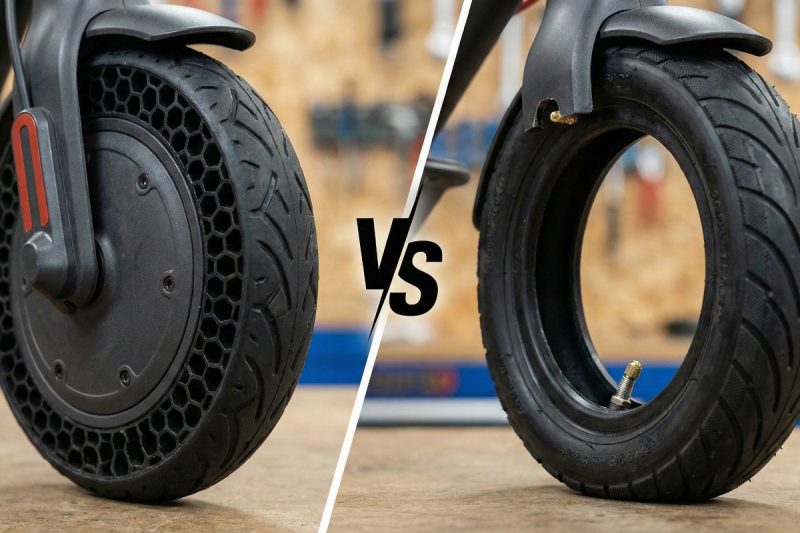
あなたはスクーターショップに立っている—またはオンラインチェックアウトページを見つめる—典型的なライダーのジレンマに直面している. 一方では, あなたが持っている 空気圧 (空気が満たされています) タイヤ, ぬいぐるみを提供する, グリップ力のある乗り心地ながら安定した走行性能を実現, しつこいタイヤのパンクの脅威. 一方で, あなたが持っている 固体 (エアレス) タイヤ, 穴には完全に耐性があると約束されていますが、石畳の上では歯がガタガタする恐れがあります。.
ゴムの種類を選ぶだけではありません; それは2つの異なる不安の間の選択です. の方が好きですか? 精神的不安 アパートで立ち往生する可能性がある, または 肉体的な疲労 一定の振動の?
「黄金律」” 電動スクーターの仕組みはシンプルです: タイヤはサスペンションの第一線です. スクーターに頑丈なスプリングがない場合, タイヤはあなたの骨格を道路から隔てている唯一のものです. 「ノーフラット」を約束する前に” ライフスタイル, 現実の世界でそのトレードオフがどのように感じられるかを正確に理解する必要があります.
触覚シミュレーション: 乗り物とは 実は 感じます
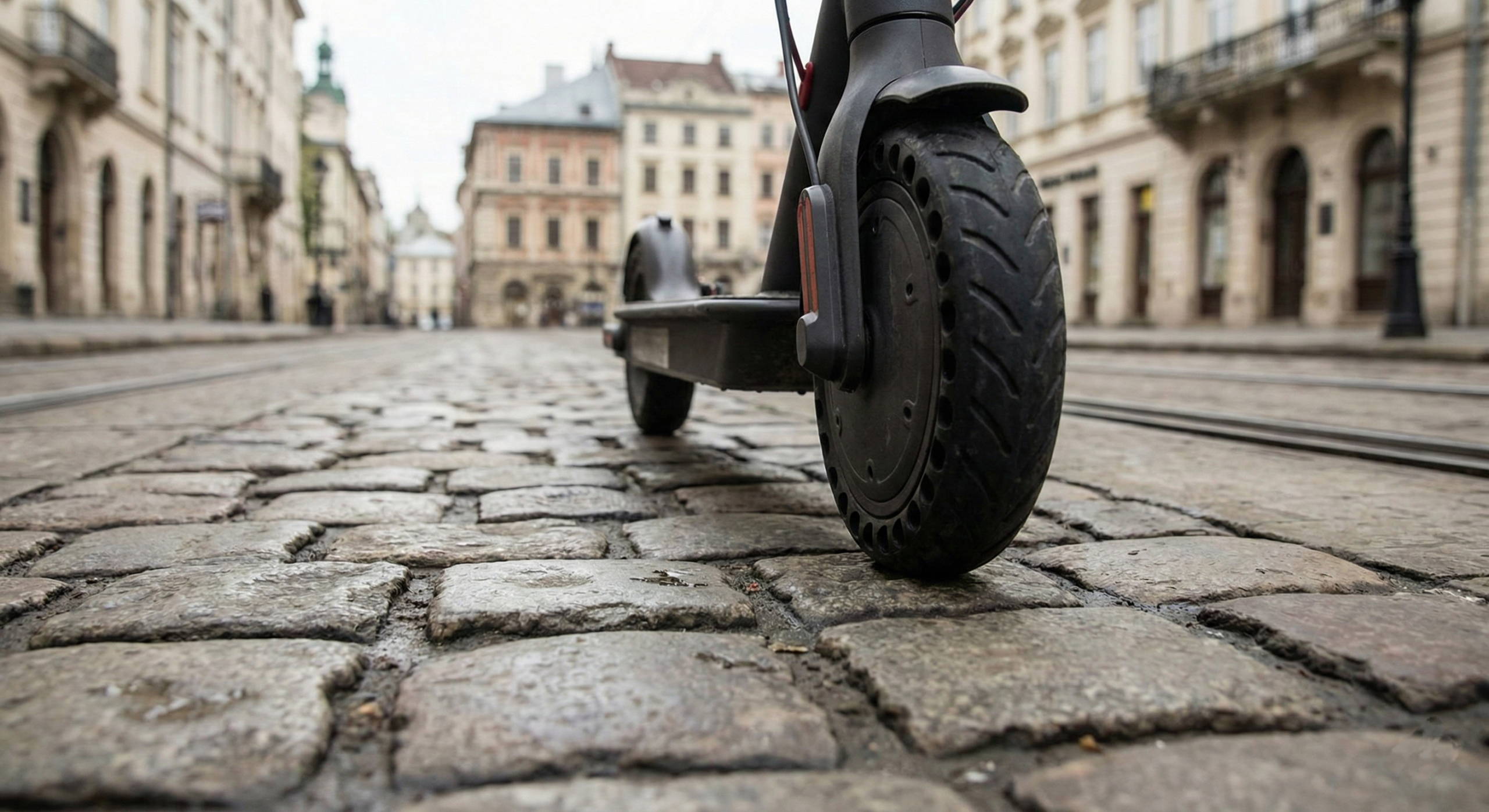
スペックだけでは乗り心地はわかりません 7:00 火曜日の午前. 決断を助けるために, ヨーロッパの一般的な都市地形におけるソリッドタイヤと空気入りタイヤの触感の違いをシミュレーションしてみましょう.
シミュレーションA: 「旧市街」” コブルストーン ラン
- 空気圧タイヤ: 石を打ちながら, 鈍い音が聞こえます, リズミカルなドスンという音. タイヤ内の空気が圧縮される, 石の端でゴムが変形することを可能にする. 手の表面の変化を感じます, でもあなたの視界はクリアなまま. 乗り心地はアクティブだが扱いやすい.
- ソリッドタイヤ: アスファルトを抜けた瞬間, 感覚が暴力的である. 高周波振動はステムからハンドルバーまで瞬時に伝わります。. 騒音レベルがハム音から大きなカタカタ音に跳ね上がる. ライダーはよく「ビビリ」を経験します。,” 振動が非常に激しいため、視界がぼやける効果が生じる場合. サスペンションのないソリッドタイヤスクーターの場合, 100 数メートルの石畳は削岩機のセッションのように感じる.
シミュレーションB: ひび割れた都市部のアスファルト & フロストヒーブ
- 空気圧タイヤ: タイヤは「浮く」” 小さな亀裂や凍上の上. エアクッションが鋭利なエッジを吸収します, つまり、小さな欠陥がないか道路を常にスキャンする必要はありません. あなたはリラックスしたままです.
- ソリッドタイヤ: あらゆる亀裂, 小枝, 小石が手のひらにダイレクトに伝わります. タイヤが衝撃を吸収できないので、, スクーターが「衝突する」” 鋭いエッジの上を転がるのではなく、その上で. コントロールを維持するために無意識のうちにグリップを締めていることに気づきます, 疲労を加速させるもの.
シミュレーションC: 「リップ」” (私道のトランジション & 歩道)
- 空気圧タイヤ: 小さな縁石リップまたは私道のトランジションを取り付ける場合, タイヤが鈍い力を吸収する. 衝撃を感じます, しかし、タイヤは地面との接触を維持します.
- ソリッドタイヤ: 激しい「叩きつけ」を感じる” または跳ね返り効果. ソリッドラバーなので (またはハニカム構造) 圧縮に耐える, 障害物を吸収するのではなく、跳ね返す傾向があります。. リップを斜めに打った場合, この跳ね返りにより、前輪が横に飛び出す可能性があります, 一時的にトラクションを失う.
シミュレーションD: スピードバンプ & トラムの線路
- 「空気」” アドバンテージ: 空気入りタイヤはバンプに当たると圧縮され、リバウンドが制御されます。. グリップの回復はほぼ瞬時に行われます.
- 確実なリスク: ソリッドタイヤは「ホップ」が起こりやすい” 効果. より硬く、より軽いです (回転質量の知覚に関して), スクーターがスピードバンプで一時的に空中浮遊することがよくあります. 金属製の路面電車の線路で, このコンプライアンスの欠如は、滑りやすい金属に接触するゴムの量が大幅に減少することを意味します。, 滑落リスクの増加.
快適心理学: 倦怠感 & 「しびれた手」” 要素
多くのライダーはスムーズな駐車場でソリッドタイヤスクーターをテストし、次のように考えます。, 「これで大丈夫です。” 問題は累積的だ.
15 分のしきい値
滑らかな舗装路で, しっかりとしたタイヤの感触 90% エアタイヤと同じくらい良い. しかし、都市の混合地形では, 時間が経つにつれて違いが大きくなる. ほとんどのライダーは、ソリッドタイヤが下での走行に耐えられると感じています 10 分. 市内の平均的な道路で 15 分を超える, しかし, を明らかにします 「白い指」” 効果.
ハンドアームの振動 (HAV)
ソリッドタイヤはロードノイズをより多く伝えるため, スクーターを安定させるために、本能的にハンドルバーを強く握ります。. この「死のグリップ」,” 連続振動と組み合わせる, 血流を制限する.
- 結果: 長い通勤の後, あなたは「アリを手に持った」状態で到着するかもしれません—チクチクとしたしびれと一時的な細かい運動能力の喪失 (タイピングやキーの使用など).
- 膝 & バックファクター: 足が二次サスペンションの役割を果たします. しっかりとしたタイヤ付き, タイヤが反発する衝撃を膝が吸収する. すでに腰の問題や膝の怪我がある場合, サスペンションのないスクーターのソリッドタイヤは一般に物理的に持続不可能です.
不安の計算: メンテナンスの恐怖 vs. 乗り心地
これが決断の感情的な核心です. あなたはどのストレス要因にうまく対処できますか?
「レンジ不安」” アパートの (空気圧)
- 恐怖: 雨の日のパンクの恐怖, 3家からキロ.
- 現実: 最近の空気入りタイヤは頑丈です. タイヤの空気圧を適正に維持していれば (毎週チェックする) 予防シーラントを使用してください, アパートは実際には珍しいです.
- 「恥の道」: 予防策を講じているにもかかわらず, アパートが起こる. どうしても遅刻できない場合 (例えば, 厳密なシフト勤務者または医療専門家) そして自分でアパートを直すことはできない, 空気の信頼性が負債になる.
「設定すればあとは忘れる」” 訴える (固体)
- 自由: ガラスの中を転がることには特別な心理的自由がある, 建設廃材, 下を向かずに棘も. タイヤの空気圧をチェックする必要はありません. スクーターに乗って出発するだけです.
- トレードオフ: 心の平安が得られます, しかし、あなたは「喜び」を失います。” グライドの. 乗り心地は純粋に実用的になります—AからBに行く—楽しいというよりも.
総所有コスト (TCO): 隠された経済学
ソリッドタイヤは「より安価なタイヤ」として販売されることがよくあります。” 真空管は買わないのでオプション. しかし, 彼らはコストを他の場所に転嫁します.
空気圧の TCO
- 直接コスト: 交換用チューブ (€10-€15), シーラント (€10/ボトル), そしてポンプ.
- 間接費: なし. エアクッションがスクーターのシャーシを保護します.
ソリッドタイヤのTCO
- 直接コスト: メンテナンスゼロ.
- 隠れたコスト: 振動は手を痛めるだけではありません; 機械を傷つけます. ソリッドタイヤは衝撃エネルギーをスクーターフレームに直接伝達します。.
- 振動による損傷: ネジがガタガタして緩んでいるソリッドタイヤのスクーターをよく見かけます。, ひび割れたリアフェンダー, ストレスを受けたステム折り畳み機構.
- バッテリーのリスク: 極端な場合、安価なシャーシでは, 一定の高周波振動により、バッテリーパックのニッケルスポット溶接に亀裂が入る可能性があります。, 高価な停電につながる.
評決: ソリッドタイヤによりチューブ交換の時間を節約できます, ただし、スクーター自体の寿命が短くなる可能性があります.
自己選択ゲートウェイ (「買わないでください」” フィルター)
決める前に, これら 3 つの重要なフィルターを確認してください. どれか一つでも失敗したら, あなたの選択はあなたのために行われます.
フィルター 1: サスペンションチェック
あなたのスクーターには高品質のフロントとリアのサスペンションが付いていますか??
- いいえ: あなた しなければならない 空気入りタイヤを選ぶ. 剛性の高いフレームにソリッドタイヤを装着することは肉体的に負担がかかり、スクーターの構造的完全性にとって危険です.
- はい: 安心してソリッドタイヤをご検討いただけます. サスペンションはタイヤではできない仕事をしてくれる.
フィルター 2: 雨天時の通勤者
雨の中でも乗りますか, または小雨が頻繁に降る都市では (ロンドン, アムステルダム, ハンブルク)?
- はい: 固執する 空気圧. ソリッドタイヤ (特に安価なプラスチックとナイロンの混合物) 濡れたアスファルトの上では信じられないほど滑りやすくなる, ペイントされた横断歩道の線, 金属製の排水カバー. 空気圧ゴムコンパウンドは、濡れた状態でのケミカルグリップを大幅に向上させます。.
フィルター 3: 「DIY」” 嫌悪感
タイヤの交換方法を学びたいですか、それとも店にお金を払ってやってもらいますか??
- いいえ: タイヤレバーを使うことを考えるとパニックになる場合, 地元に修理工場がない場合, 固体 それがあなたの唯一の実行可能な選択肢です. それを補うために、優れたサスペンションを備えたスクーターを購入するようにしてください。.
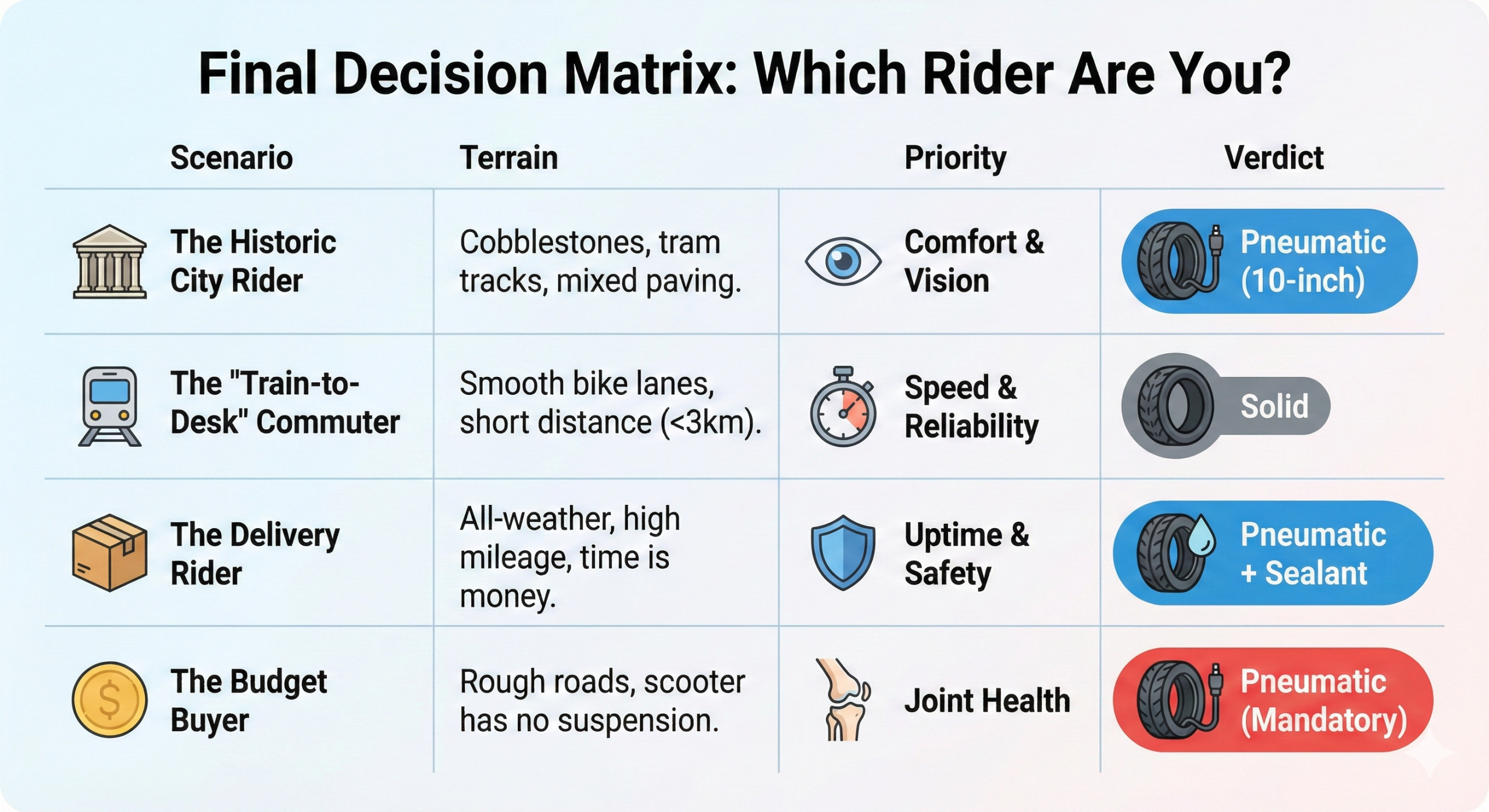
最終決定マトリックス: あなたはどのライダーですか?
結論
あなたの タイヤ あなたのスクーターの靴は何ですか. 登山靴を履くこともできます (空気圧) または下駄 (固体). どちらも足を守ります, でも一日中痛みなく歩けるのはたった一つだけ.
通勤がスムーズで短い場合, の利便性 ソリッドタイヤ 無敵です. しかし、ヨーロッパのほとんどの都市の現実では、—美しくも凹凸のある街路と予測不可能な天候—空気圧タイヤ 安全性と快適性の点で優れた選択肢であり続ける. 時々タイヤがパンクすることは、骨がガタガタしない乗り心地のために支払う小さな代償です。.
次のステップ: 明日の朝, 自分のルートを見下ろしてください. アスファルトの質感を実際に見てください. 自分自身に問いかけてください: 「手首にこれを隅々まで感じることに耐えられるでしょうか?」?”
