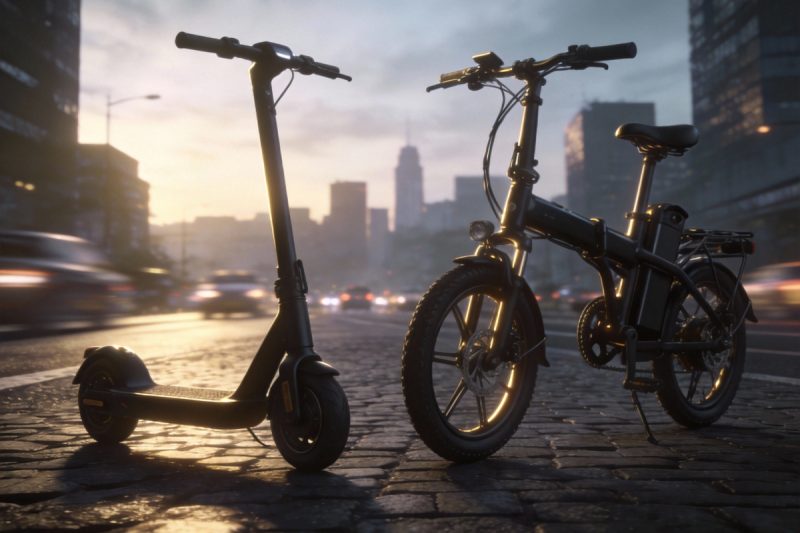
Deciding between an electric scooter vs folding eBike isn’t just about comparing battery specs or top speeds; it is about defining the physical and legal constraints of your daily journey. Both vehicles solve the “last mile” problem—bridging the gap between your home, public transit, and the office—but they do so with vastly different trade-offs regarding portability, ride comfort, and stability.
If you are stuck in the consideration phase, this guide will help you validate which device fits your specific logistical environment and which one will become a burden.
The “Dealbreaker” Tests: Start Here
Before looking at range or motor power, apply these four tests to your commute. If a device fails any of these, it is likely the wrong choice for you.
1. The “Legal Reality” Check
- The Scooter Reality: In many cities (e.g., London, parts of Sydney), privately owned electric scooters are currently illegal on public roads or require specific insurance and registration (e.g., Germany).
- The eBike Reality: Generally treated as standard bicycles in most of the world, granting you access to bike lanes and roads without fear of fines. However, check your local laws regarding throttles. In Europe, “throttle-only” riding is often restricted to mopeds, meaning you must pedal to get motor assist.
2. The “Stair Test”: Weight Limits & Ergonomics
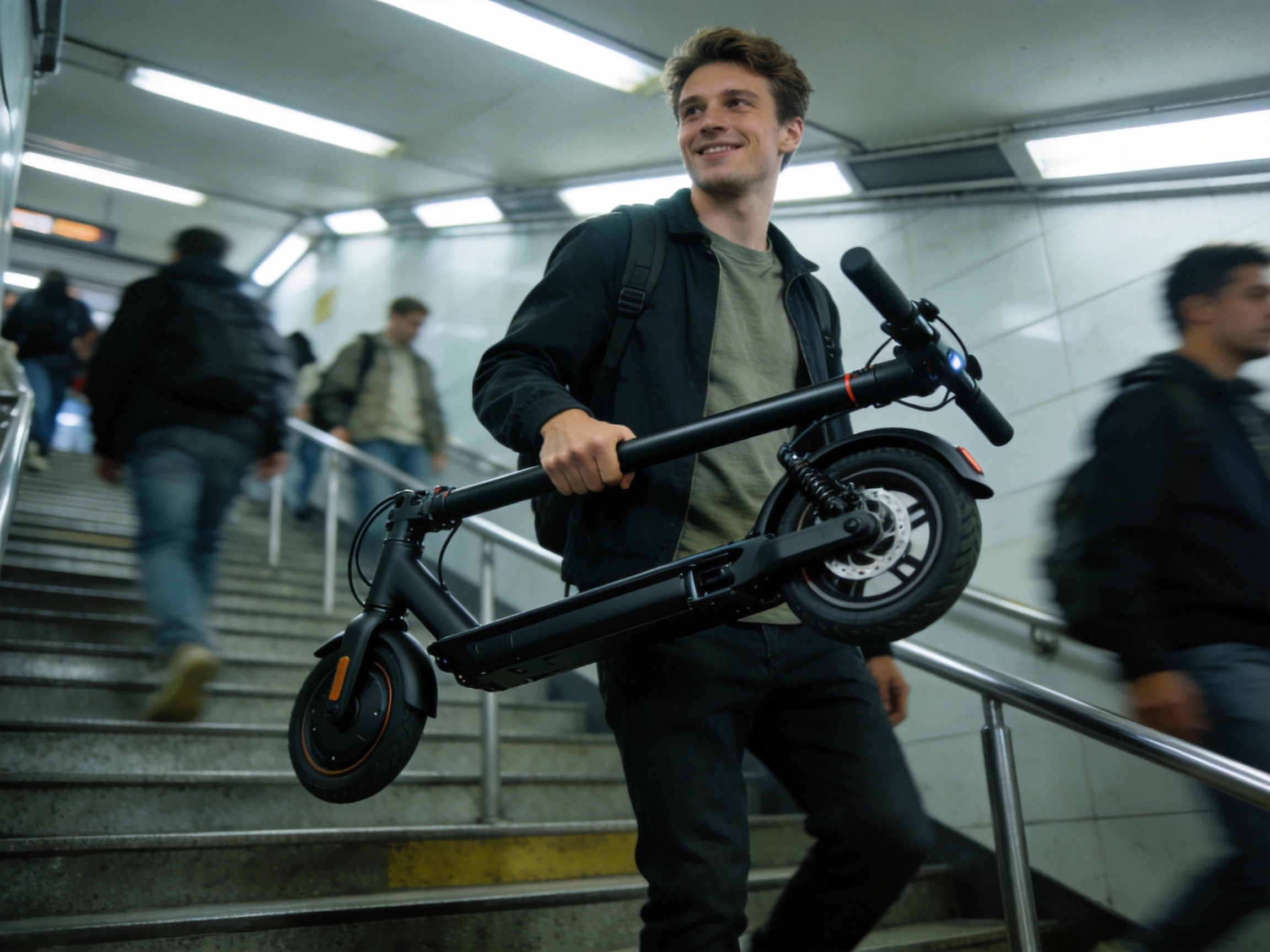
- The Scooter Reality: Most portable scooters weigh between 12kg and 18kg. While not “light,” their slim profile makes them easier to tuck against your side while walking up narrow stairwells.
- The eBike Reality: Even compact folding eBikes typically start at 18kg and can exceed 24kg. Lifting this “dead weight” is significantly harder, especially if the frame doesn’t lock securely when folded. If your commute involves more than one flight of stairs daily, a folding eBike may quickly become physically unmanageable.
3. The “Train Seat” Test: Transit Rules & Footprint
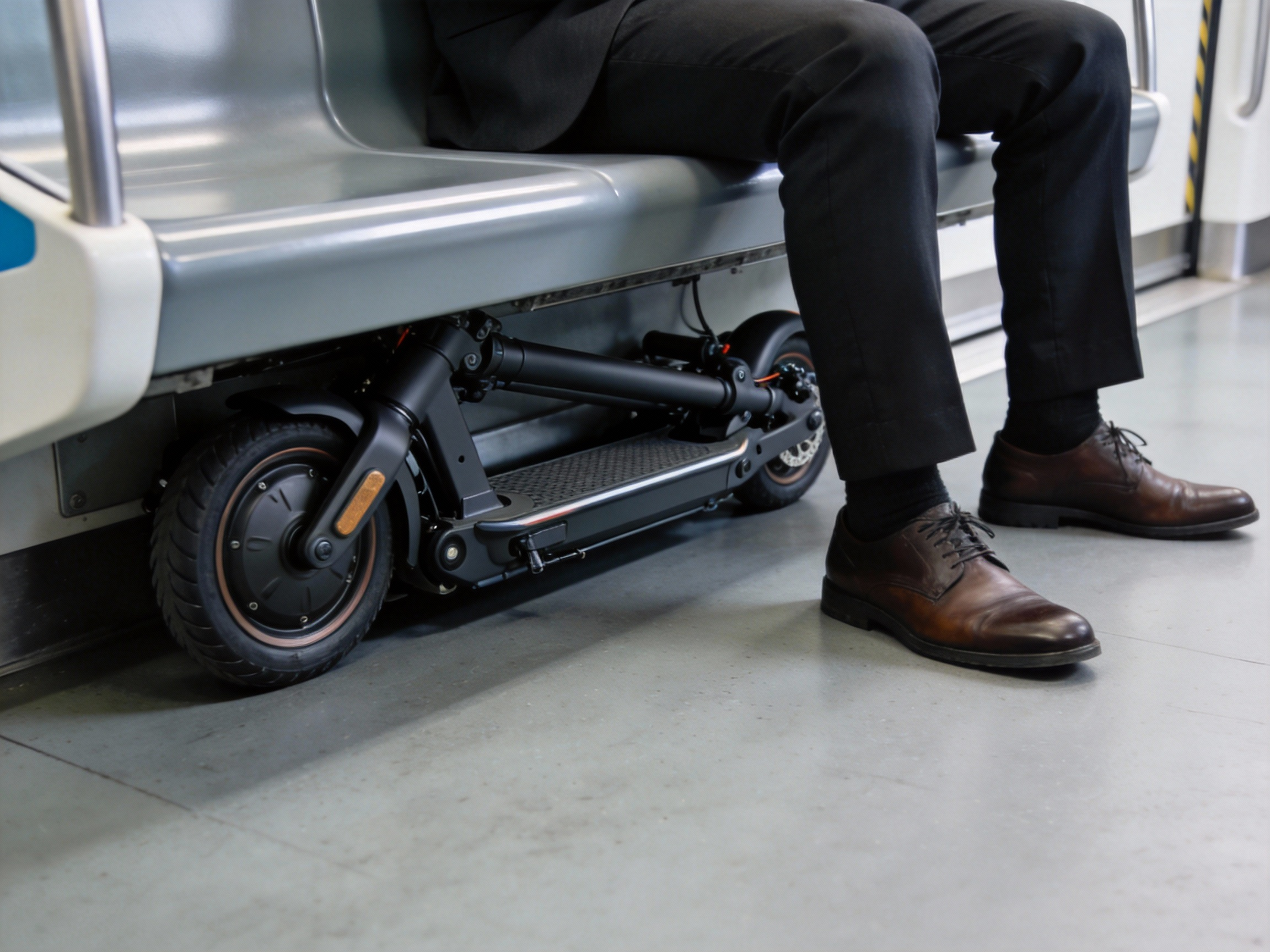
- The Scooter Reality: A scooter folds in seconds and slides under most seats. Warning: Due to fire safety concerns regarding lithium batteries, some major transit networks (like TfL in London or specific lines in Barcelona/Madrid) have explicitly banned electric scooters while still permitting eBikes. Always check your transit operator’s specific rules.
- The eBike Reality: Folding a bike often requires 3–4 steps and results in a boxy shape that rarely fits under a seat. You will likely need to stand in the vestibule, which can be stressful during rush hour.
4. The “Road & Weather” Test: Stability & Grip
- The Scooter Reality: Small wheels (8–10 inches) have a steep “angle of attack,” meaning they get trapped in potholes rather than rolling over them. Crucially, scooter tires (especially solid ones) have poor traction on wet surfaces. Riding over wet metal covers or painted lines can be dangerous.
- The eBike Reality: Larger wheels (16–20 inches) roll over cracks and gravel with ease. The larger rubber contact patch provides significantly better grip in the rain, making the eBike a strictly safer option for all-weather commuters.
Scenario 1: The “Mixed-Mode” Commuter (Train + Ride)
For users who spend 90% of their time on a train or bus and only ride for the final few kilometers.
Why the Scooter Wins on Crowded Transit (If Permitted)
In a crowded carriage, vertical space is premium. A scooter stands vertically between your legs, minimizing social friction. You are less likely to annoy fellow commuters with grease or protruding handlebars.
Why the Folding Bike Struggles in Rush Hour
Chain grease on pants is a real risk. Furthermore, carrying a folded bike through ticket barriers is often a clumsy waddle compared to rolling a scooter.
Verdict: Who should choose the Scooter here
If your commute is primarily public transit with short rides at either end, and your local transit authority permits them, the electric scooter is the superior logistical tool.
Scenario 2: The “Longer Haul” Commuter (5km+ One Way)
For users who rely less on trains and more on the vehicle itself to cover distance.
Fatigue Factors: Standing vs. Seated Riding
Standing on a scooter requires constant micro-adjustments to balance, which engages your core and legs. Over 5km or 20 minutes, this becomes fatiguing. A folding eBike allows you to sit, shifting weight off your legs and lowering your center of gravity.
Stability at Speed: Wheelbase Physics
Scooters have a short wheelbase and a high center of gravity (you). This makes them “twitchy” at high speeds; emergency braking requires skill to avoid going over the handlebars. eBikes offer a longer wheelbase and familiar geometry, reducing the risk of tipping forward during hard stops and making one-handed signaling (for turns) much safer.
Verdict: Who should choose the Folding eBike here
If your ride exceeds 5km, involves traffic interaction, or takes place in a city with frequent rain, the folding eBike is the safer, more sustainable choice.
Scenario 3: Utility & Lifestyle Integration
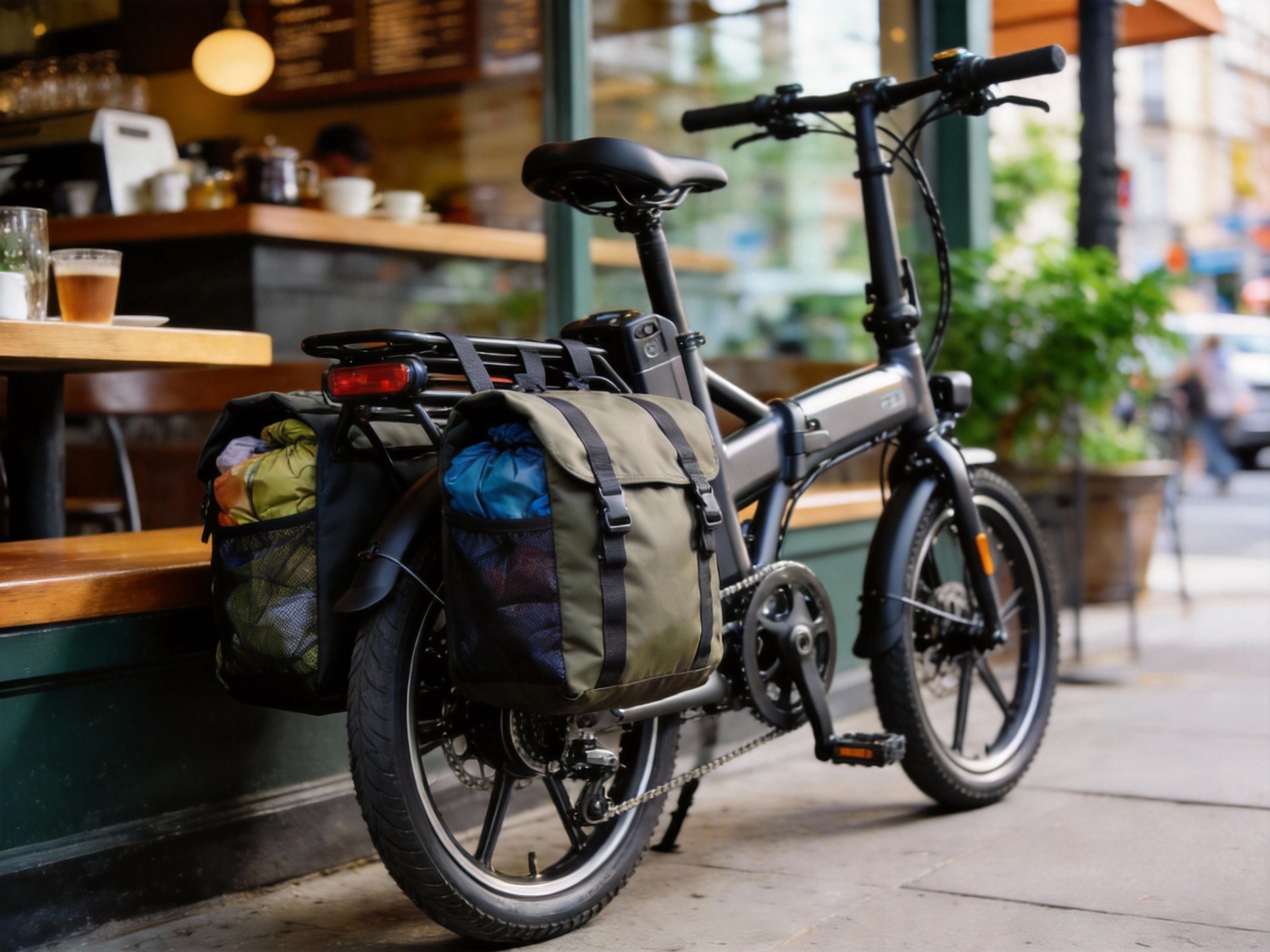
Cargo Capacity: Backpacks vs. Racks
- Scooter: You are the cargo rack. Carrying heavy loads raises your center of gravity and destabilizes the ride. Hanging bags on handlebars is dangerous.
- eBike: Most folding eBikes support rear racks. You can attach panniers to carry groceries or laptops without bearing the weight on your body.
Maintenance Reality: Tires vs. Chains
- Scooter: While you don’t have a chain to oil, changing a flat tire on an electric scooter can be notoriously difficult due to the motor hub design. Many users find they cannot do this at home.
- eBike: Has more moving parts (chain, gears) that need cleaning, but standard maintenance (like fixing a flat or adjusting brakes) is standard bicycle mechanics that any local shop can handle.
The “Sweat Factor”: Throttle vs. Pedal Assist
- Scooter: 100% electric assist means zero physical exertion. You will arrive at the office exactly as cool as you left home.
- eBike: Most regions (especially Europe/UK) require Pedal Assist, meaning you must pedal to move. While easy, it is still physical movement. If a “zero sweat” policy is non-negotiable, the scooter has the edge—provided your local laws allow it.
Final Decision Matrix: Which Profile Are You?
Choose the Electric Scooter IF…
- Your ride is short (under 3–4 km) and on dry, smooth days.
- You have confirmed it is legal on your local roads and public transit.
- You have limited storage space at home or work.
- You prioritize “grab-and-go” portability over ride comfort.
Choose the Folding eBike IF…
- Your ride is medium-to-long (over 5 km).
- You commute in all weather conditions (including rain).
- You need to carry cargo (groceries, laptop) without a backpack.
- You value the stability and safety of a seated position.
- You have the physical strength to lift 18kg+ occasionally.
The “Hybrid” Compromise
If neither fits perfectly—perhaps the bike is too heavy but the scooter is banned on your train—consider if the commute itself can change. Could you use a secure bike station at the train terminal to avoid carrying the vehicle? Sometimes the best mobility strategy is adapting the route, not just the hardware.
