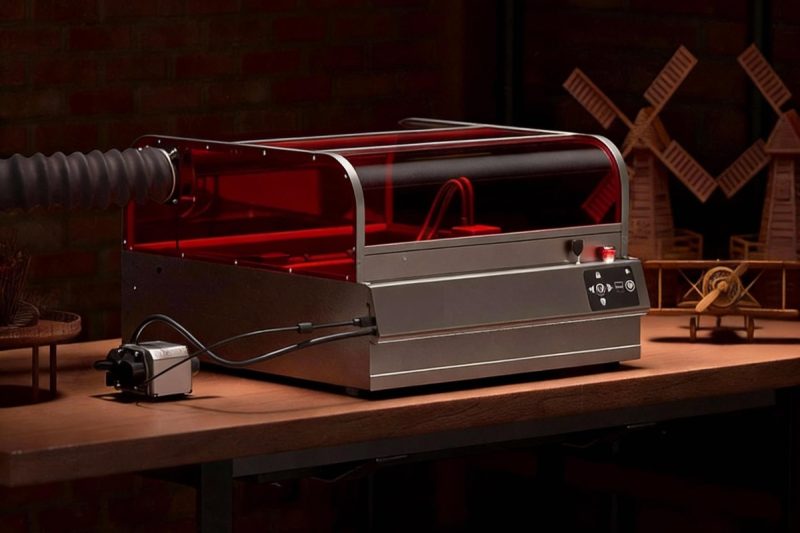
Buying your first laser cutter is exciting, but the “hidden” costs often catch users off guard. After purchasing the machine, materials, and software, you are faced with a critical safety question: Do I really need a laser engraver enclosure?
Many manufacturers of open-frame diode lasers market their machines as “ready to use,” leaving the enclosure as an optional accessory. However, depending on your living situation and local regulations, an enclosure is often less of an accessory and more of a mandatory safety barrier.
This guide analyzes the real risks of open-frame engraving, helps you evaluate your specific environment (especially for apartment dwellers), and clarifies the critical technical difference between a simple box and a certified “Class 1” safety setup.
The Decision Matrix: Mandatory vs. Highly Recommended
To simplify the decision, we have categorized users based on their environment and risk profile. Use this matrix to quickly identify where you stand.
| User Environment | Risk Level | Enclosure Verdict | Reasoning |
|---|---|---|---|
| Apartment / Shared Room | Critical | Mandatory | Smoke, PM2.5 particles, and noise must be contained to protect housemates and neighbors. |
| Home with Pets or Children | Critical | Mandatory | Unpredictable movement from pets/kids creates a high risk of eye injury from stray beams. |
| Indoor Garage / Workshop | High | Highly Recommended | Necessary for dust control, fume extraction efficiency, and reducing fire spread risks. |
| Production / Small Business | High | Highly Recommended | Required for consistent temperature control (quality cuts) and employee/operator safety compliance. |
| Dedicated Outdoor Shed | Moderate | Optional | If the shed is well-ventilated, isolated from people/pets, and you wear PPE 100% of the time. |
Risk Assessment: The “Apartment Test”
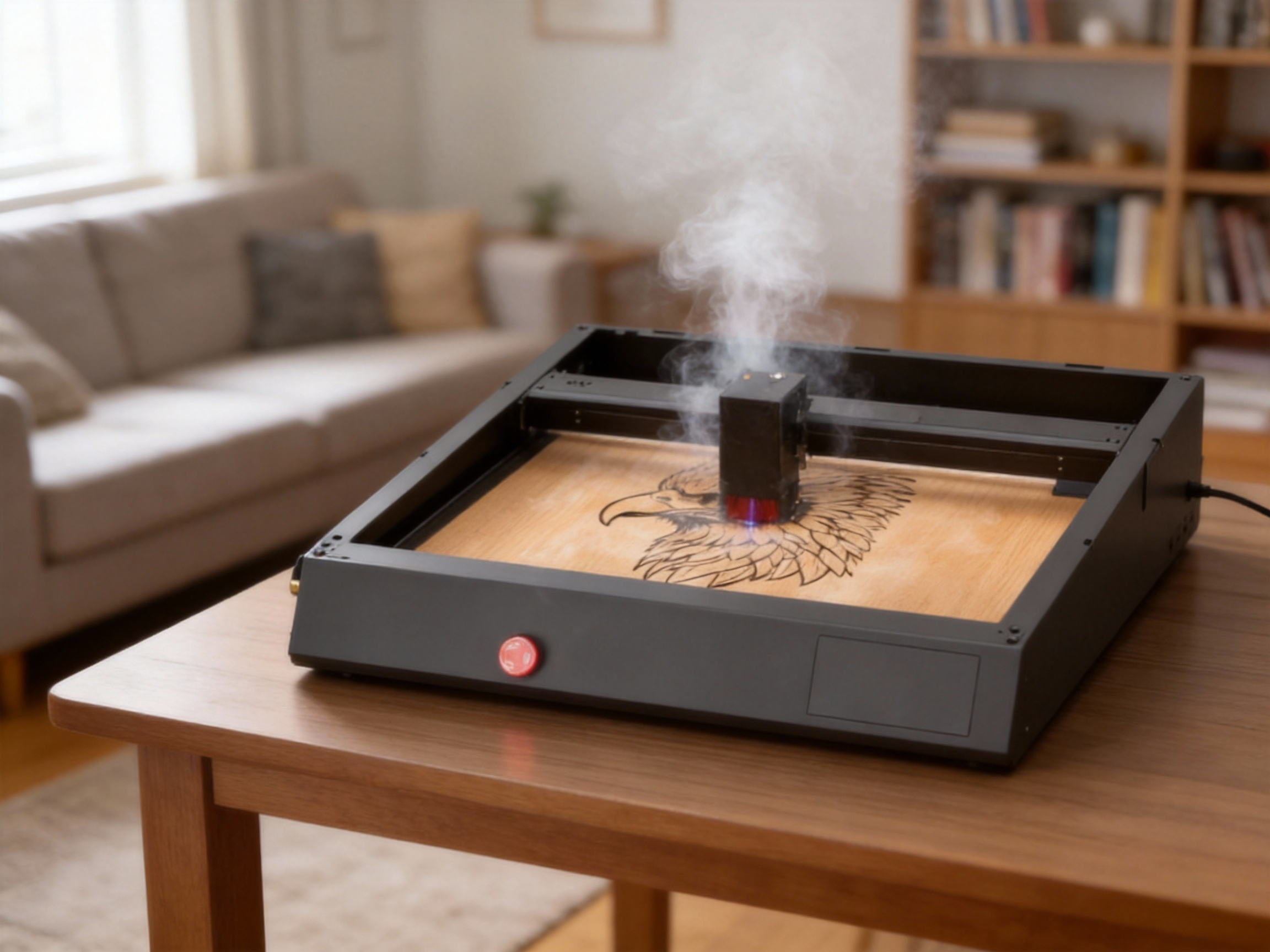
If you are planning to operate a laser engraver inside an apartment or a room with shared ventilation, “opening a window” is rarely sufficient. Here is why an enclosure is critical for indoor users.
1. The PM2.5 Reality
Laser engraving—especially cutting wood, acrylic, or leather—produces significant amounts of particulate matter (PM2.5) and Volatile Organic Compounds (VOCs). Without a laser engraver enclosure, these particles drift freely into your living space. Even if you don’t smell smoke, these invisible particles can linger in carpets and furniture, degrading indoor air quality significantly.
2. The “One Mistake” Rule
In a small living room or office, you do not have the luxury of distance. If a laser beam reflects off a shiny surface (like a metal tag or a tool left on the bed), it can instantly damage eyesight or burn nearby curtains. An enclosure creates a physical barrier that contains stray reflections, ensuring that a mistake doesn’t become a disaster.
3. Noise Pollution
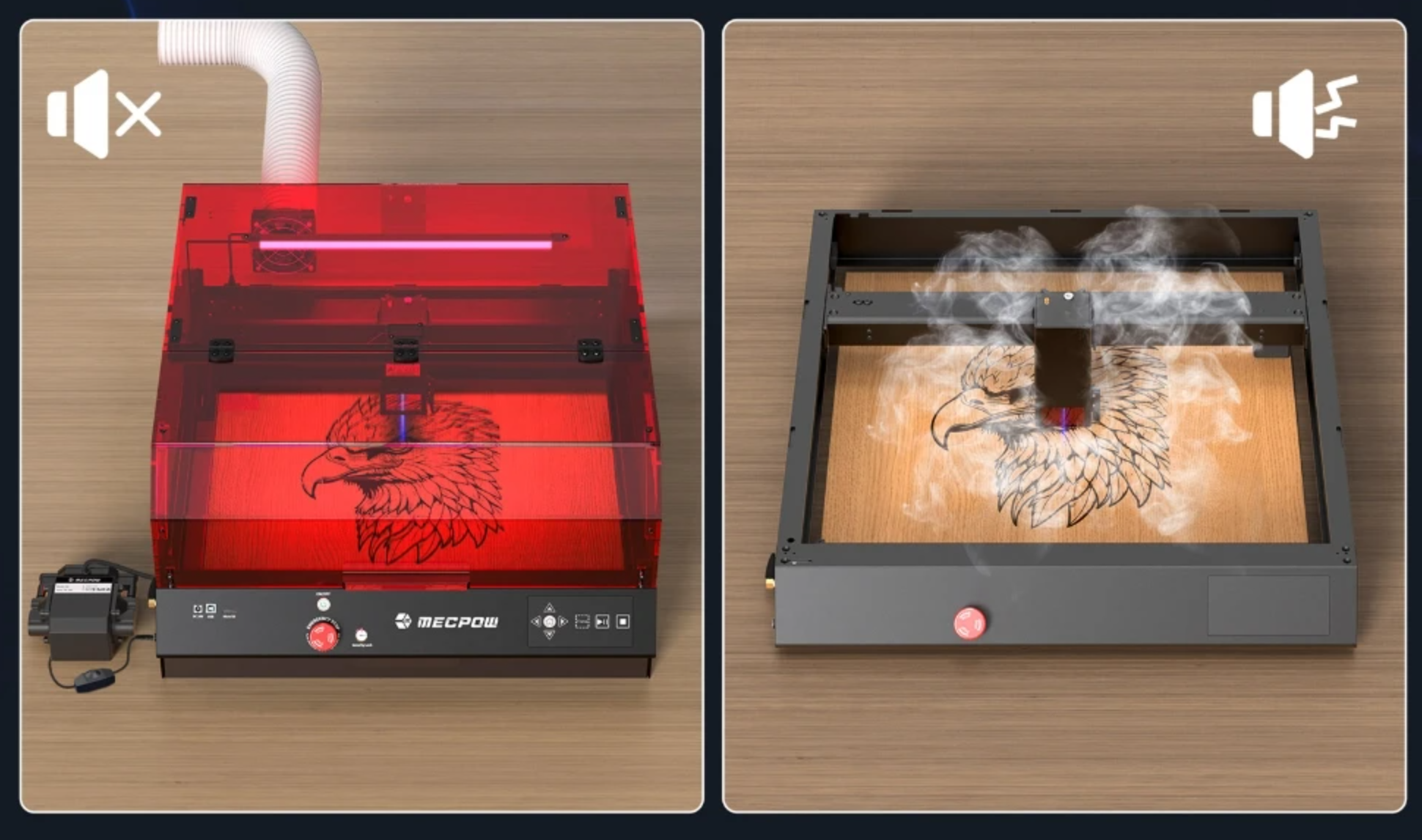
Open-frame diode lasers and their air-assist pumps can be noisy (often 60–70dB). Adding an enclosure can dampen this noise by 10–20dB, which is the difference between an annoying vacuum cleaner and a quiet hum—crucial for maintaining good relations with neighbors or family members.
European Safety Standards: The “Class 4” to “Class 1” Upgrade
For users in Europe (and safety-conscious users globally), understanding laser safety classifications is essential for liability and insurance.
The Open-Frame Problem (Class 4)
Most open-frame diode lasers are classified as Class 4 laser products. This means the beam is exposed and capable of causing instant eye injury and skin burns.
- Requirement: Everyone in the room must wear safety goggles at all times.
- Liability: In a business or educational setting, operating a Class 4 device often requires a designated Laser Safety Officer and strict access control.
The Enclosure Solution (Class 1 Compliance)
It is important to note that simply putting a box over a laser does not automatically make it “Class 1.” To achieve a true Class 1 safety environment (where no hazardous radiation can escape):
- Full Containment: The enclosure must be fully sealed against the specific wavelength of your laser.
- Safety Interlocks (Critical): The enclosure must feature an automatic shut-off sensor. If the lid is opened during operation, the laser must stop instantly.
Note: Many cheap “tent-style” enclosures lack this interlock feature. While they offer physical containment, they technically remain Class 4 devices operationally because the user can open the zip while the laser is firing.
Fire Safety & Fume Extraction: The Enclosure’s Real Job
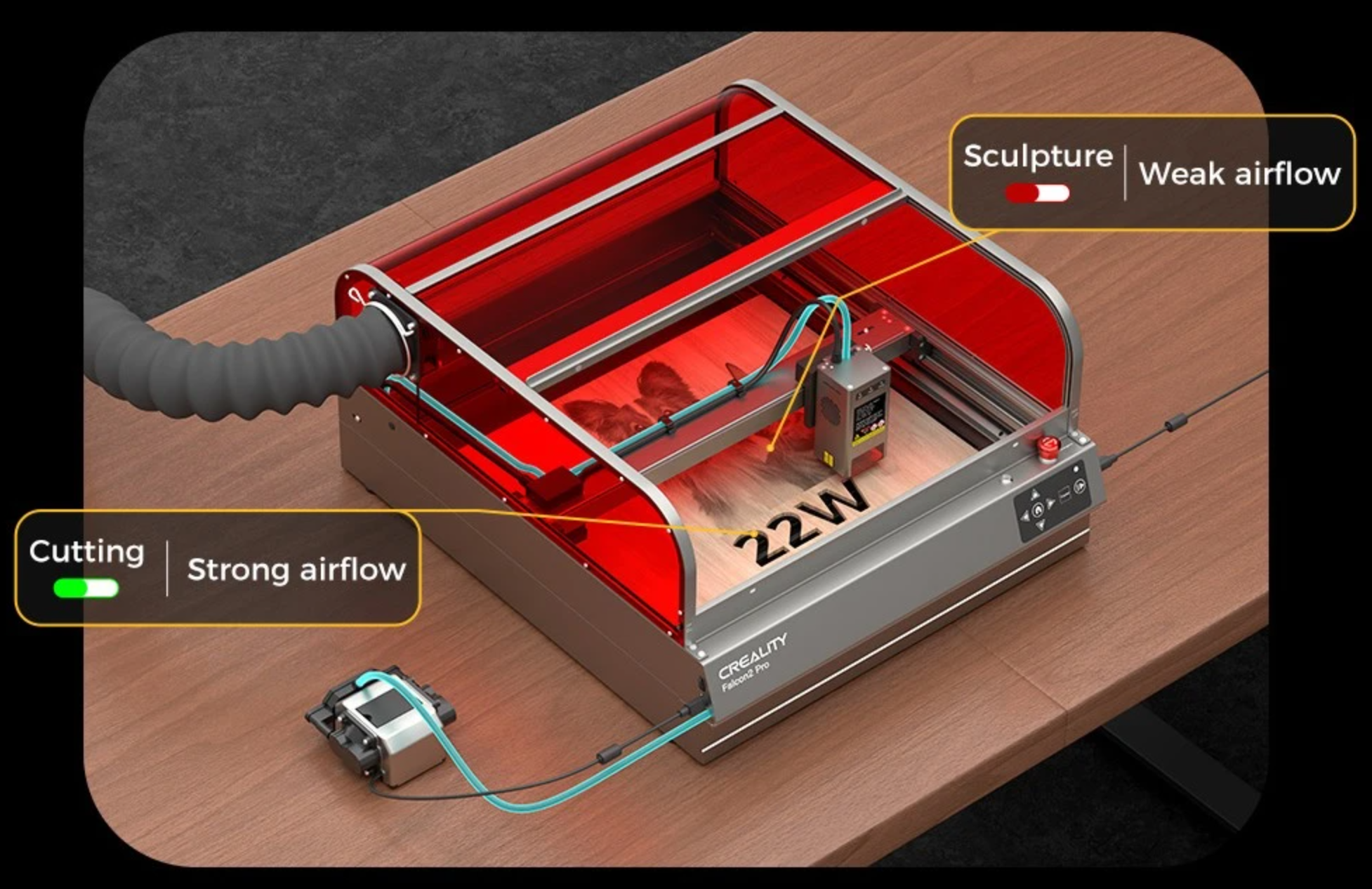
Many users believe an enclosure is just a box. In reality, it is a critical component of your airflow system.
The Chimney Effect
Ventilation fans are ineffective in open air. If you place a fan next to an open-frame laser, it merely blows the smoke around the room. An enclosure creates a sealed environment, allowing the exhaust fan to generate negative pressure. This ensures that 100% of the fumes are sucked out of the workspace and vented outdoors or through a filter.
Fire Containment
While no enclosure is fireproof indefinitely, high-quality enclosures are made from fire-resistant materials (silicone-coated fiberglass or steel).
- Scenario: If your workpiece catches fire, an open-frame machine allows the fire to spread to your desk immediately. An enclosure deprives the fire of unlimited oxygen airflow and contains the flames, buying you critical seconds to hit the emergency stop or use a fire extinguisher.
- Pro Tip: For maximum safety, pair your enclosure with a Flame Detector that connects to your machine’s motherboard to auto-stop the laser if a flame is detected.
The Usability Trade-off: Workflow vs. Protection
A common hesitation is that an enclosure will make the machine harder to use. While this is a valid concern, the trade-offs are manageable.
- The Cons:
- Access: It is harder to frame materials or wipe down the lens without reaching into a box.
- Space: Enclosures have a large footprint and cannot be easily tucked away.
- The Pros (Workflow Benefits):
- Cleanliness: The enclosure keeps dust out of your mechanical rails and belts, reducing maintenance.
- Temperature Stability: Enclosures keep the ambient temperature around the cut stable, preventing warping in sensitive materials like ABS or thin plywood.
DIY vs. Pro Enclosures: A Safety Warning
Budget-conscious users often ask: “Can I just build a box out of plywood?”
We strongly advise against wooden DIY enclosures.
Building a laser enclosure out of wood or cardboard is essentially building a “fire oven.” If the laser ignites the workpiece, a wooden enclosure will also catch fire, increasing the fuel load.
If you choose to DIY, you must use:
- Non-combustible materials: Sheet metal, cement board, or fire-rated drywall.
- Wavelength-Specific Shielding:
- Blue Diode (450nm): Standard orange laser acrylic is effective.
- Infrared (1064nm): If you use an IR module for metal engraving, standard orange acrylic will not protect you. You need specialized shielding rated for 1064nm.
Final Scenario Recommendations
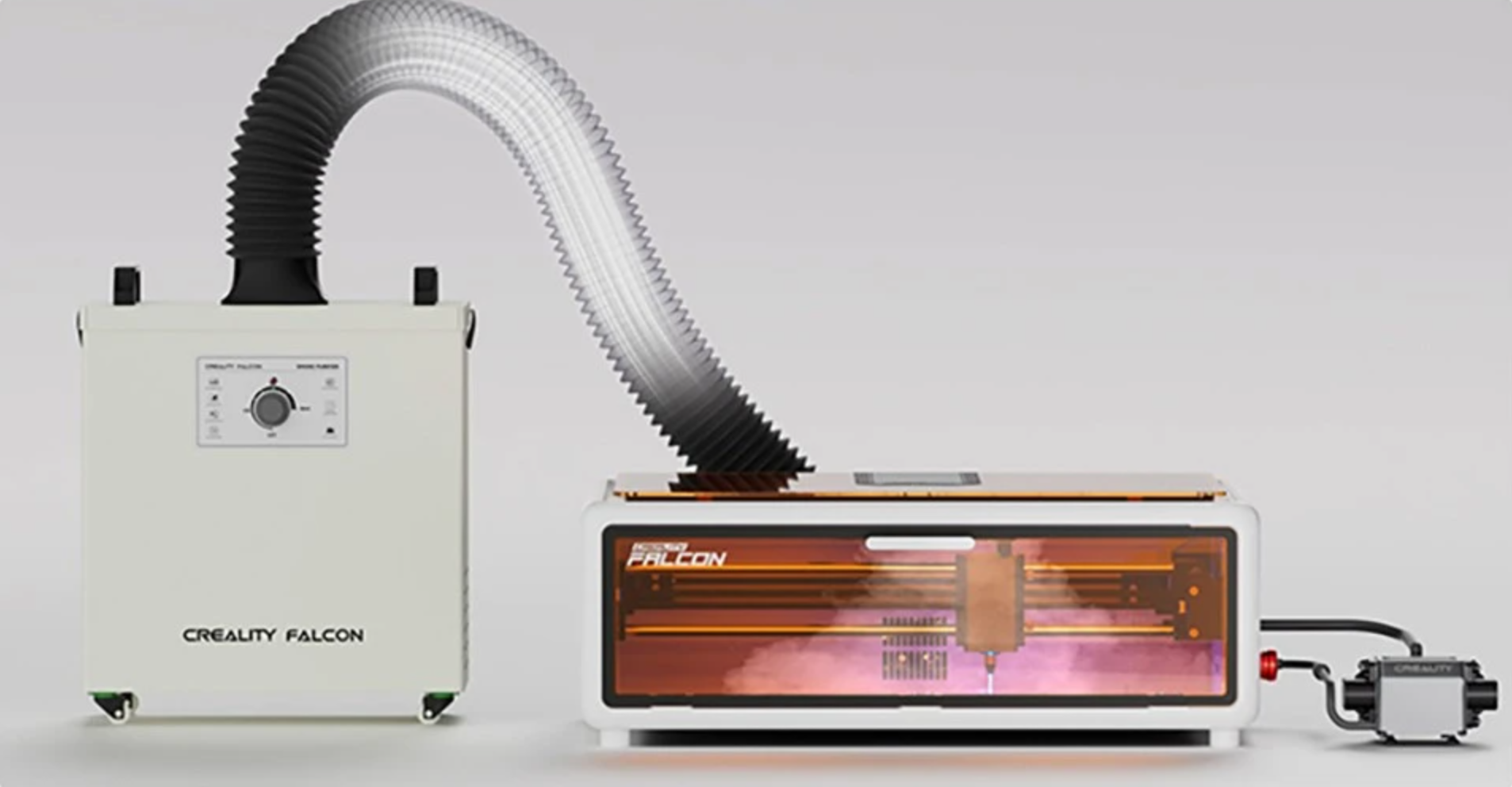
Scenario A: The Kitchen Table Hobbyist
- Verdict: Mandatory Enclosure + High-Grade Air Purifier.
- Why: You are in a high-traffic zone. You cannot risk a family member walking in on an active beam.
- Note: Cheap soldering fume extractors are not enough for cutting wood. You need a purifier with a large-capacity Carbon/HEPA filter, otherwise, the room will still smell of campfire smoke.
Scenario B: The Garage Tinkerer
- Verdict: Highly Recommended (Soft Enclosure).
- Why: A “tent-style” fire-resistant enclosure is sufficient here. It protects the machine from garage dust and allows you to vent fumes under the garage door.
Scenario C: The Production Shop
- Verdict: Rigid Interlocked Enclosure with Exterior Venting.
- Why: For 8 hours of daily use, you need a rigid metal or acrylic enclosure that can withstand heavy cleaning. For legal compliance with employees, ensure the enclosure has active safety interlocks.
FAQ: Addressing Lingering Safety Doubts
Q: Can I just wear safety glasses instead of buying an enclosure?
A: Glasses protect your eyes, but they do not protect your lungs from fumes, your home from fire risks, or your pets from blinding themselves. Glasses are a personal defense; an enclosure is an environmental defense.
Q: Does a laser engraver enclosure filter the air itself?
A: No. An enclosure contains the air. You must attach an exhaust fan and a duct hose to the enclosure to move the dirty air outdoors or into a filter unit.
Q: Is it illegal to run a laser without an enclosure in Europe?
A: It is generally not illegal for a private hobbyist to own a Class 4 open laser, but you are fully liable for any accidents. However, if you have employees or run a business, strict workplace safety laws (like PUWER in the UK or EU Directives) effectively mandate the use of Class 1 enclosed systems with interlocks.
Q: How do I vent an enclosure if I don’t have a window nearby?
A: You will need a Fume Extractor. Be aware that cutting wood creates heavy tar and smoke that can clog small filters quickly. Budget for replacement filters or look for industrial-grade units if you plan on heavy cutting.
