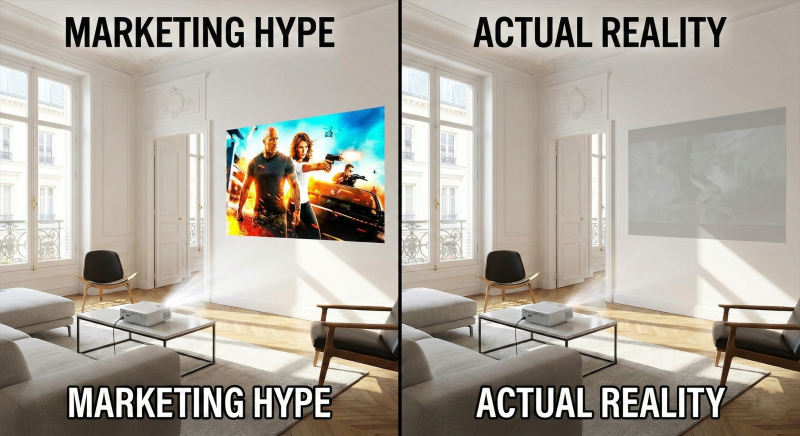
You’ve seen the videos on TikTok and Instagram: a cozy, sun-drenched minimalist apartment, a tiny projector sitting on a coffee table, and a massive, vibrant movie playing on the wall in broad daylight. It looks magical. It looks affordable. And for under €300, it seems like the perfect alternative to a bulky black TV.
Here is the reality check: Physics does not care about aesthetic Instagram reels.
The core question many European renters and budget buyers ask is: “Can I actually use a cheap projector to watch TV during the day?”
The honest answer is no, not without significant compromises. While a sub-€300 projector can be a fantastic device for late-night gaming or movie marathons, expecting it to fight the sun is a recipe for disappointment. This guide is for the student, the flat-sharer, and the flexible renter who wants to know exactly what they are buying before they spend their hard-earned money.
The “Lumen Lie”: Why Your €200 Projector is Lying to You
When you search for budget projectors, you will see wild numbers: “9,000 Lumens,” “12,000 Lux,” or “Ultra-Bright LED.” These numbers are often meaningless marketing fluff designed to confuse you.
Marketing Lumens vs. ANSI Lumens (The Myth-Buster)
To understand if a projector is bright enough, you must ignore the big numbers on the box and look for one specific metric: ANSI Lumens (or sometimes ISO Lumens).
- Light Source Lumens (The Trap): This measures the theoretical brightness of the light bulb inside the machine before it passes through any lenses or filters. It sounds impressive (e.g., “9,000 Lumens”), but it doesn’t tell you how bright the picture will be.
- ANSI Lumens (The Truth): This measures the actual light that hits your wall. It accounts for the light lost inside the projector.
The Reality: A projector claiming “9,000 Marketing Lumens” often only puts out 200 to 450 ANSI Lumens.
For context, a professional cinema projector is 20,000+ ANSI Lumens. A decent home theater projector starts at 2,000 ANSI Lumens. In the under-€300 category, you are working with very limited light power.
The “Black Level” Problem
This is the most critical concept to understand: Projectors cannot project black.
They can only project light. To create “black” in an image (like a space scene or a shadow), the projector simply stops shining light on that spot.
If you are watching in a bright room, your “black” is the color of your white wall illuminated by sunlight. This means your contrast ratio drops to near zero. The image doesn’t just look dim; it looks “washed out” and grey.
The “European Living Room” Test: Real-World Usability Scenarios
Let’s apply these numbers to a typical European apartment setup—white walls, standard windows, and limited space.
Scenario A: Uncovered Windows / Direct Sunlight
- Time: 14:00 on a clear day.
- Environment: Sun streaming through the window, hitting the floor or wall.
- Verdict: Unusable.
- The Experience: You will see a faint, ghostly rectangle on the wall. You might be able to vaguely recognize a news anchor’s face, but you won’t be able to read subtitles or see any details. No projector under €2,000 can fight direct sunlight, and a €300 one has zero chance.
Scenario B: Overcast Day / Thin Curtains (Light Leakage)
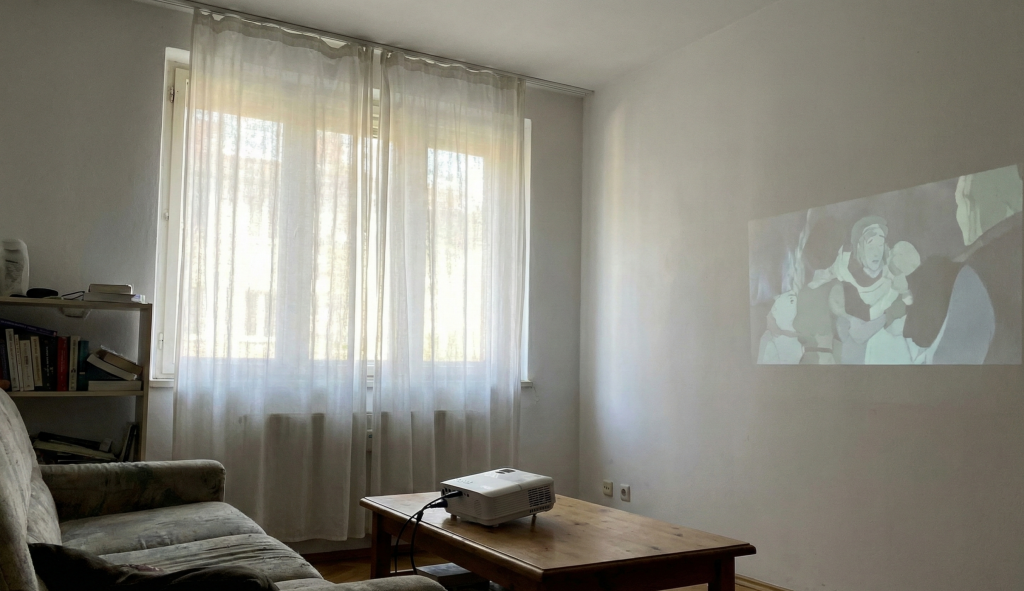
- Time: A cloudy Tuesday afternoon or a summer evening at 19:00.
- Environment: You have standard curtains (not blackout) closed, but light still leaks in from the sides.
- Verdict: Compromised.
- The Experience: This is the “casual use” zone. Bright, colorful content like cartoons (The Super Mario Bros. Movie), sitcoms (Friends), or sports (football pitches are bright green) will be visible but faded.
- Warning: Dark dramas or horror movies (The Batman, Stranger Things) will be unwatchable. You will see your own reflection in the grey wall more than in the movie.
Scenario C: The “Size Sacrifice” (Shrinking the Image)
- The Physics Hack: Brightness is determined by how much you spread the light out.
- The Trade-off: If you move your projector closer to the wall to create a 40-inch or 50-inch image, it will be significantly brighter and more watchable in daylight.
- The Problem: If you are only projecting a 50-inch image, why didn’t you just buy a TV?
⚠️ Expert Warning: The “Keystone” Trap
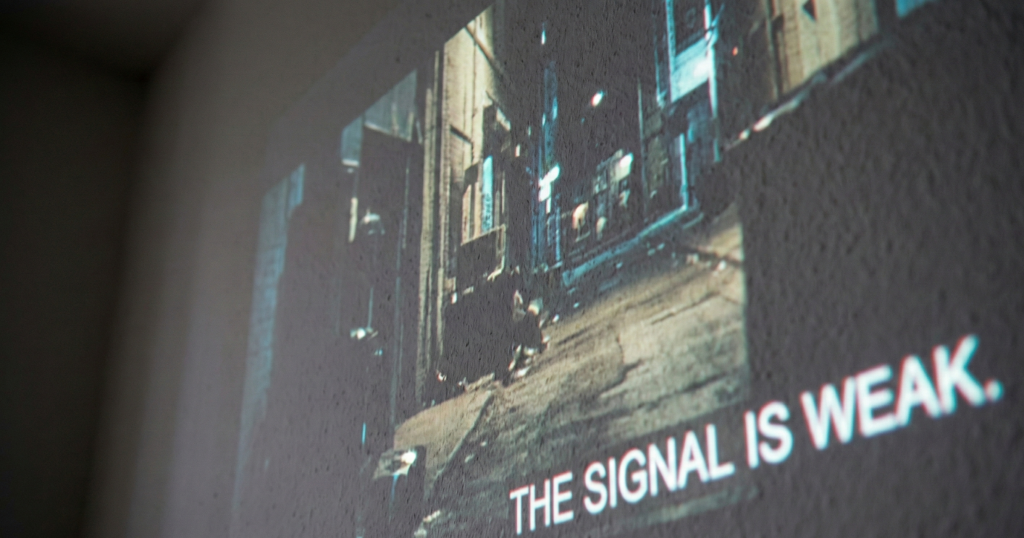
Many cheap projectors advertise “Digital Keystone Correction” (fixing the image shape if you place the projector in a corner). Avoid using this if possible.
Digital correction works by turning off pixels and cropping the image. This reduces your resolution and cuts your brightness by another 20-30%. To get the maximum brightness out of a cheap projector, it must be placed dead center in front of the wall.
The Brutal Comparison: Budget Projector vs. Budget TV
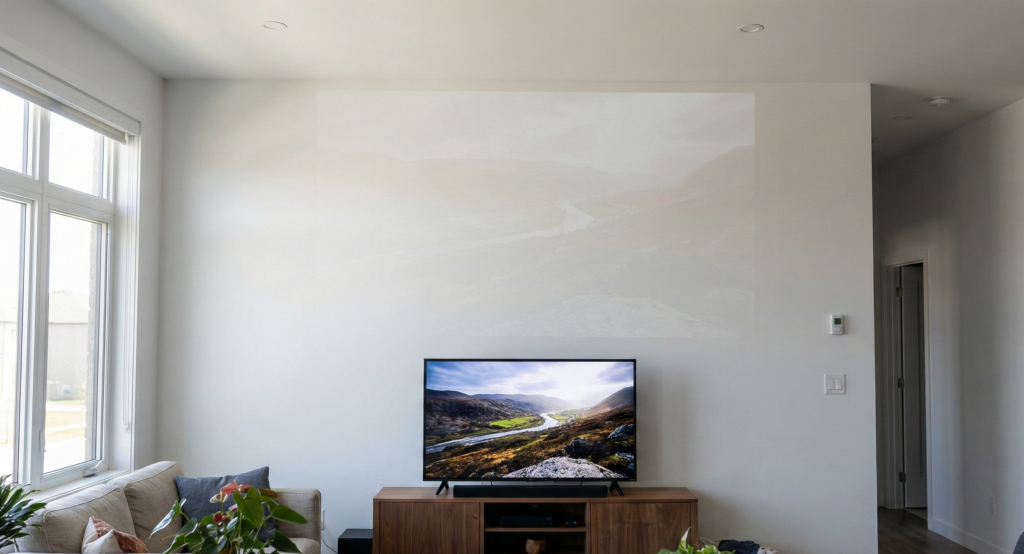
Many buyers in this price range are choosing between a cheap projector and a cheap 43-inch 4K TV.
| Feature | Sub-€300 Projector | Sub-€300 4K TV (43-50 inch) |
|---|---|---|
| Daylight Visibility | Poor. Requires curtains/darkness. | Excellent. Works in any light. |
| Resolution | 1080p, often with blurry corners. | 4K Ultra HD (Crisp text edge-to-edge). |
| Contrast (Blacks) | Grey/Washed out in the day. | Deep blacks & rich colors always. |
| Screen Size | Massive (80″–120″). | Fixed (43″–50″). |
| Setup | Easy to hide, portable. | Big black rectangle in the room. |
| “Vibe” | Cinematic, cozy, romantic. | Standard, functional. |
The Takeaway: A cheap TV wins 100% of the time for image quality, text readability, and daylight usability. A projector only wins on screen size and portability.
Buyer Self-Filter: Do NOT Buy This If…
Before you click “Add to Basket,” be honest about your habits.
The Red Flags
- You hate closing curtains: If you love your bright, airy living room and refuse to sit in the dark at 2 PM, a projector will frustrate you.
- You are a Gamer: Cheap projectors often have high input lag (>100ms). Your button presses will feel delayed (“laggy”), and you won’t see enemies hiding in shadows.
- You read a lot of subtitles: Budget projectors often have “soft focus” in the corners. Subtitles at the bottom of the screen might look blurry.
- You have South-facing windows: In Europe, these get intense light. Without blackout shutters (volets roulants), the room will never be dark enough during the day.
The Green Flags
- You are a “Night Owl”: You mainly watch content after 20:00.
- You have Roll-Down Shutters: Common in France, Spain, and Italy. If you can make your room pitch black at noon, the projector works perfectly.
- You prioritize “Vibe” over Specs: You don’t care about 4K HDR; you just want a huge image on the wall for a movie night with friends.
- It’s a Secondary Screen: You have a laptop/tablet for day usage, and the projector is only for special occasions.
Conclusion: Managing Expectations is Key
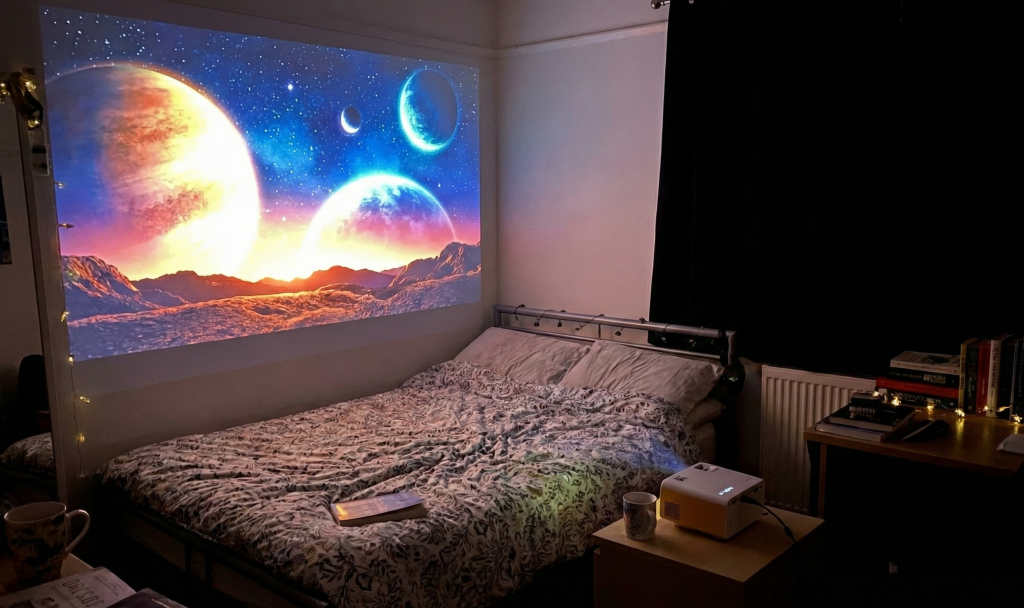
A projector under €300 is a “Night Creature.”
It can transform a dorm room or small apartment into a magical cinema space—but only when the lights go out. If you treat it like a TV replacement that you can watch with the windows open, you will feel scammed. If you treat it as a special “event” device for evenings and dark weekends, it is one of the best entertainment investments you can make.
The golden rule: If you buy a budget projector, spend the extra €30 on a good set of blackout curtains. That €30 will improve your picture quality more than spending €200 more on the projector itself.
