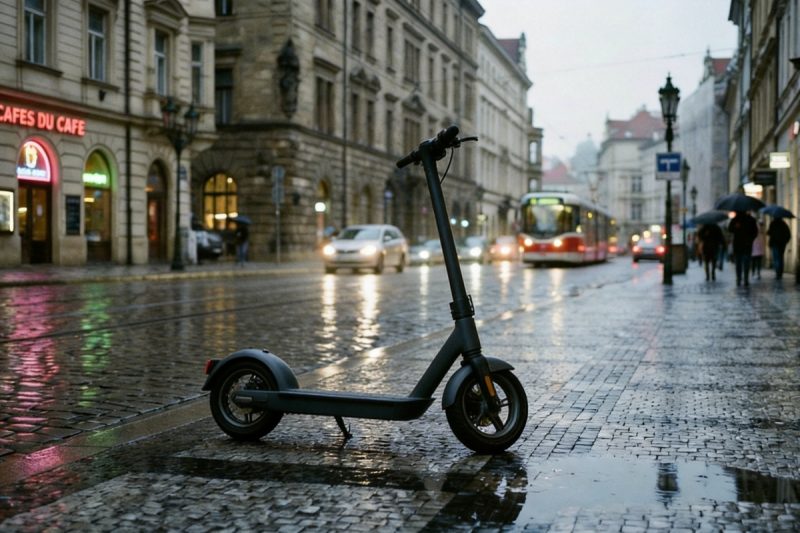
The reality of commuting in Europe is that the weather is rarely perfect. You might leave your office in Berlin or London under clear skies, only to find yourself riding an electric scooter in the rain halfway home. This guide moves beyond marketing claims to answer the critical questions: Is it safe? Will it ruin your battery? And most importantly, when should you simply leave the scooter folded and take the bus?
The “Go/No-Go” Decision Matrix
Before you unlock your scooter, you must perform a self-filtering risk assessment. Do not rely solely on the scooter’s spec sheet; you must judge the environment and your specific equipment.
CRITICAL TIRE WARNING: Do you have Solid (Honeycomb) Tires?
If yes, your grip on wet surfaces is significantly lower than pneumatic (air-filled) tires. For solid tires, treat “Green Light” conditions as “Yellow Light” risks.
Green Light (Proceed with Caution)
- Weather: Light mist or drizzle.
- Road Surface: Damp but no standing water.
- Visibility: Full visibility of the road ahead.
- Action: Reduce speed, increase braking distance, and avoid sharp turns.
Yellow Light (High Risk – IPX5 Recommended)
- Weather: Steady rain.
- Road Surface: Visible puddles, wet leaves, or slick painted lines.
- Context: If you own a standard IP54 scooter, you are entering the danger zone for water ingress.
- Action: Only ride if absolutely necessary. Avoid all puddles. Dry the scooter immediately upon arrival.
Red Light (ABSOLUTELY NO RIDE)
- Weather: Heavy downpour, thunderstorms, or high winds.
- Road Surface: Flooded cycle paths, deep puddles (water reaching the rim), or snow/slush.
- Risk: Extremely high probability of electronic failure and accident due to hydroplaning.
- Action: Do not ride. Standard commuter scooters, including those rated IP54, are not designed for these conditions.
Understanding Water Resistance: IP54 vs. IPX5
Many riders mistakenly believe an IP rating makes a vehicle “waterproof.” In reality, it only indicates a specific level of resistance under controlled test conditions.
IP54: The Industry Standard (Splash Resistant)
Most consumer electric scooters are rated IP54.
- What it means: The scooter is protected against water splashes from any direction.
- The Reality: It can handle light drizzle and damp roads. It cannot withstand high-pressure water or submersion.
- The Vacuum Effect (Hidden Danger): Water ingress isn’t just about pressure; it’s about physics. When a hot motor (from riding) is hit by cold rain or splashes, the rapid cooling creates a vacuum effect inside the hub. This can actively suck moisture past the seals and into the motor, even on IP-rated devices.
IPX5: The Upgrade (Jet Resistant)
Higher-end commuter models may offer IPX5 ratings.
- What it means: The scooter is protected against low-pressure water jets from any direction.
- The Reality: These scooters have superior sealing on the deck, display, and cable entry points. They offer a higher safety margin if you get caught in a shower.
- The Limitation: IPX5 still does not make the scooter a submarine. Submerging the wheels in deep puddles can still force water into the bearings.
European Road Hazards: Traction is the Enemy

In Europe, the primary danger in the rain is often not the water itself, but how the water interacts with historical infrastructure.
1. Cobblestones and Bricks
Common in historical centers (e.g., Belgium, Italy, Germany), cobblestones become incredibly slick when wet. They vibrate the scooter, reducing tire contact patches.
- Pro Tip: If you have solid tires, do not ride on wet cobblestones. It is akin to riding on ice.
2. Tram Tracks
Steel tram rails are ubiquitous in major EU cities. When wet, they are as slippery as ice. Crossing a tram track at a shallow angle in the rain is the leading cause of urban scooter accidents. Always cross tracks at a perpendicular (90-degree) angle, or dismount and walk.
3. Painted Cycle Lanes
The thick paint used for cycle lanes and zebra crossings becomes treacherous when wet. Avoid braking or turning while your tires are on painted lines.
Practical Ownership: Preventing Silent Damage
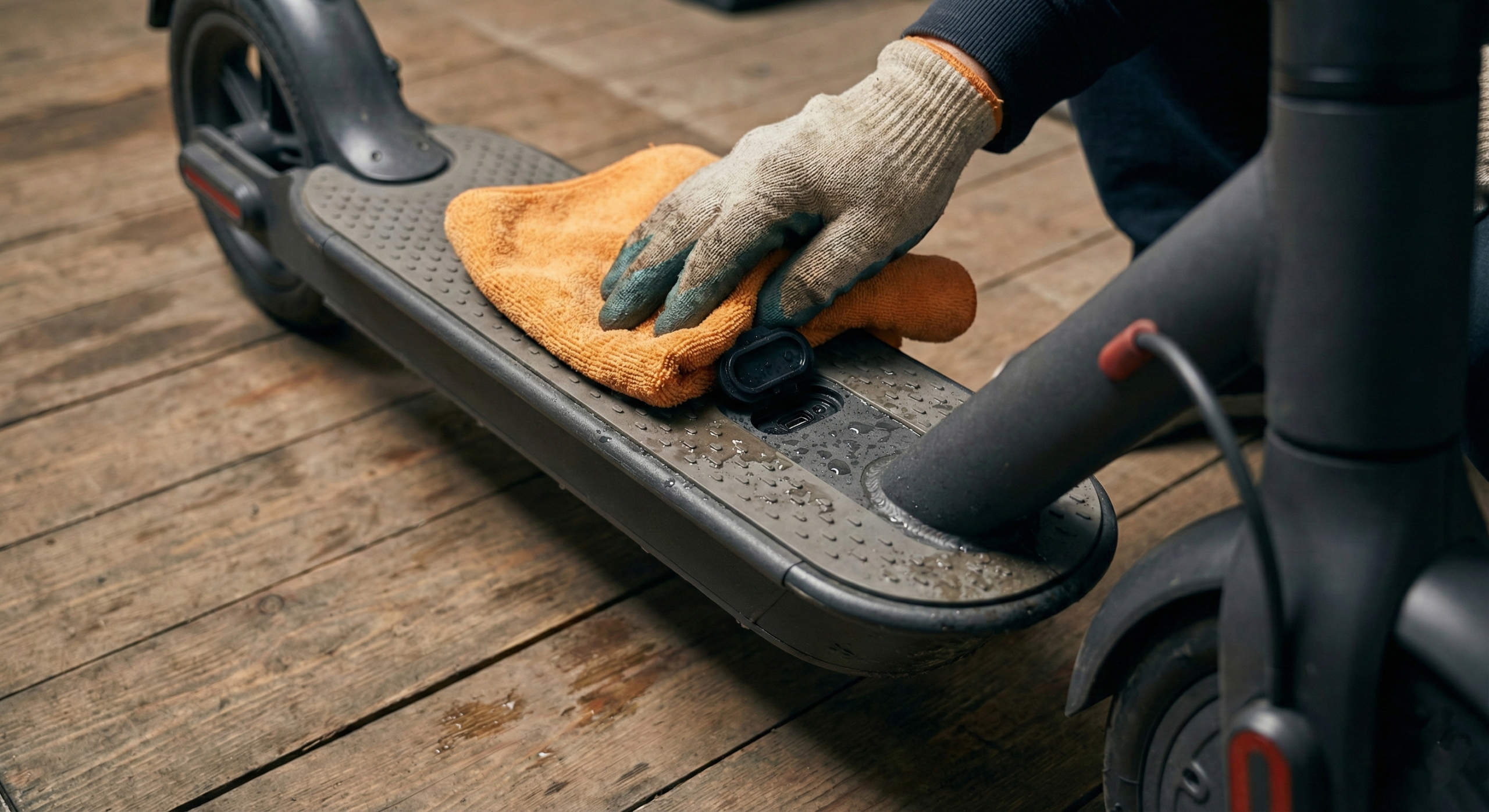
Water damage is rarely immediate. It is a slow process of corrosion that destroys your scooter weeks after the rainy ride.
The “After-Ride” Ritual
If you have ridden in the wet, follow these steps to protect your investment:
- NEVER Charge Immediately: This is the golden rule. Plugging a charger into a wet port can cause a short circuit, destroying the Battery Management System (BMS) or risking a fire.
- Towel Dry: Wipe down the stem, deck, and especially the display. Water often wicks down the cables into the controller.
- Gravity Drain: If possible, keep the scooter upright to allow water to drain away from the deck seals.
- Check the Port: Ensure the charging port is 100% dry before closing the rubber cap.
Safe Riding Techniques
If you are caught in the rain and must continue:
- Reduce Speed by 50%: Wet roads increase braking distance significantly.
- Technique for Disc Brakes: Wet disc brakes can lock up suddenly or squeal. Periodically, “pump” (lightly tap) the brake lever while riding to wipe the water off the rotor before you actually need to stop.
- Stay Upright: Do not lean into corners. Turn the handlebars slowly while keeping the scooter vertical to maintain maximum tire contact.
- Soften Your Stance: Keep knees slightly bent to absorb unexpected slips or bumps without losing balance.
Conclusion
An electric scooter is a fantastic tool for the “last mile,” but it has physical limitations. While an IPX5 rating offers better peace of mind than IP54, no scooter is invincible. The smartest decision a rider can make during a heavy European downpour—especially if riding on solid tires—is to leave the scooter folded and take a cab. It is always cheaper to pay a fare than to replace a water-damaged battery.
